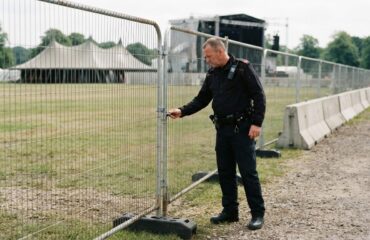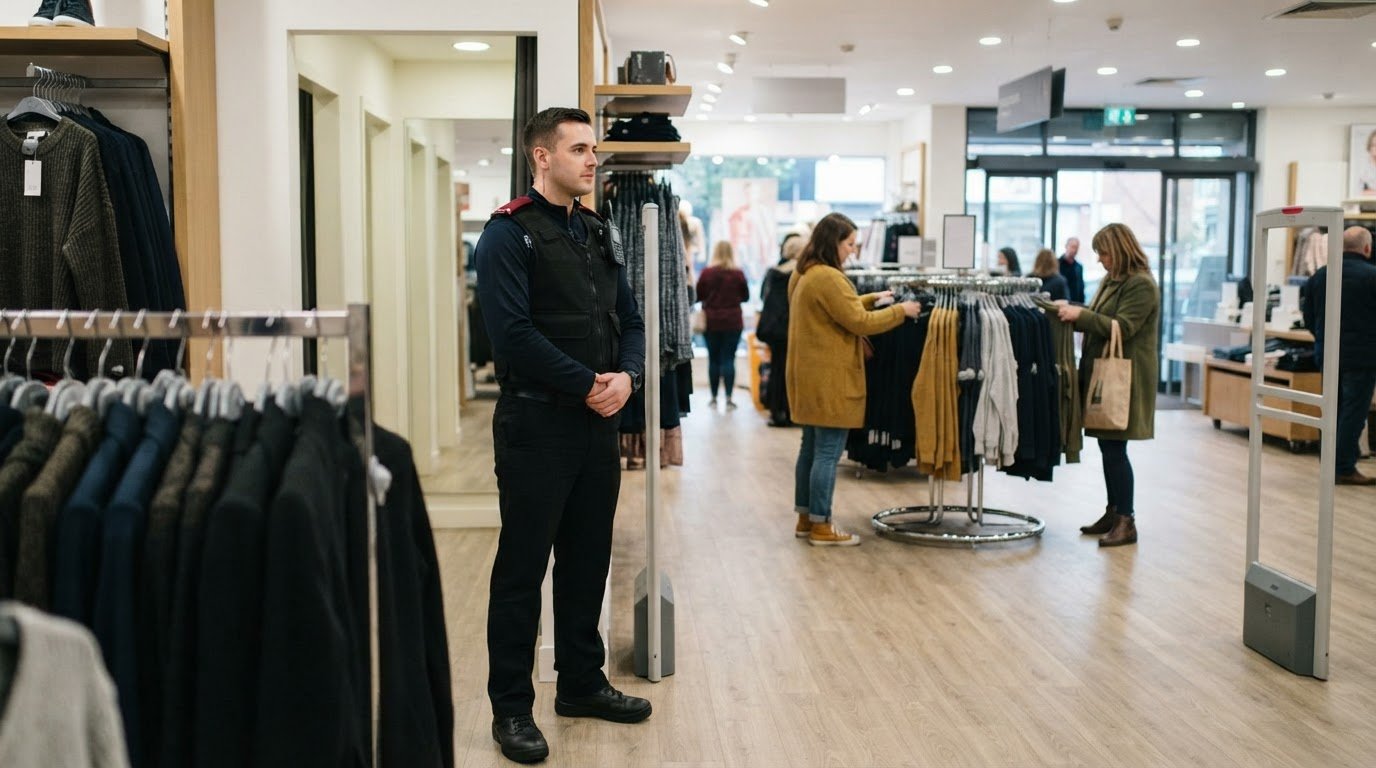
A visible, manned presence can address risks that cameras alone cannot manage. Retail security guards monitor activity across the store, notice behaviour that may need attention and respond to incidents in line with established procedures. Their role is to support customer and staff safety while helping protect stock and premises.
Effective store security involves more than positioning a guard at the entrance. Clear responsibilities, awareness of the retail environment and calm communication all matter, especially when an incident needs escalation. A professional guard can also assist customers, helping create a safer, more orderly shopping environment.
This article explains how visible guarding can help protect a retail store, what responsibilities officers may have and how manned security fits into a wider plan. It also covers the practical factors that shape an effective service, so you know what to consider when arranging retail security for your premises.
Key Takeaways
- Assess where a visible security presence can best support staff, customers and store operations.
- Understand how attentive observation and consistent procedures can help deter theft and limit losses.
- Learn how guards respond to incidents, escalate concerns and work within legal and company procedures.
- Identify when a tailored manned guarding service may strengthen your store’s security arrangements.
Why are retail security guards important?
In UK stores, visible security personnel can support customer service, orderly operations and responses to emerging concerns. Their conduct matters because each interaction can influence a shopper’s impression of the retailer.
Customer service and brand representation
A guard represents the retailer through professional conduct, clear communication and a composed approach. Welcoming shoppers at the entrance, for example, makes assistance accessible without disrupting employees’ duties. When assessing a service, consider whether personnel can stay alert while remaining respectful, follow store procedures and communicate in a way that reflects the brand.
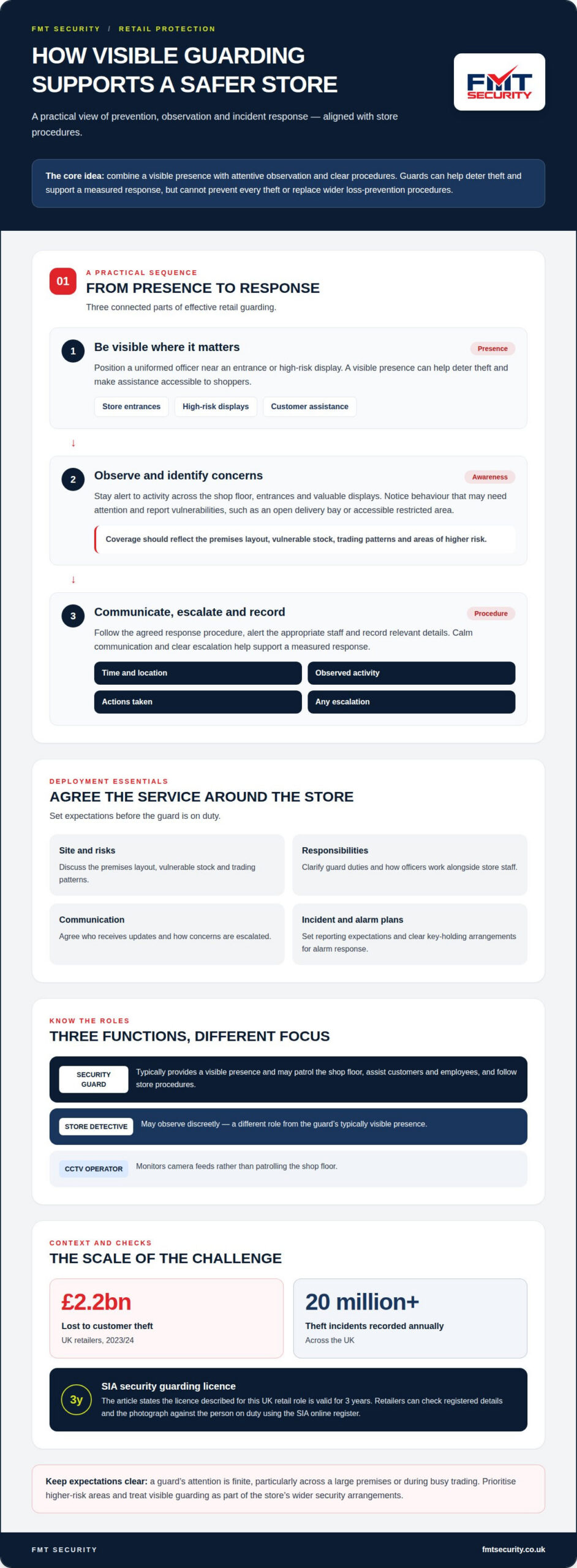
For a UK retail role, the relevant credential is an SIA licence for security guarding. According to the Security Industry Authority, the licence described for this career is valid for 3 years. Retailers can check a guard’s SIA licence using the Security Industry Authority’s online register, matching the registered details and photograph to the person on duty.
Conflict resolution and crowd safety
Conflict management calls for security personnel to recognise changing behaviour, communicate calmly and follow the store’s escalation procedures. During a busy promotion, a guard might monitor queues, notice rising tension and alert colleagues before access routes become blocked. Look for disciplined communication and a clear understanding of how concerns should be escalated.
Crowd management also contributes to customer safety. Guards can monitor entrances, exits and congested areas, then direct customers towards clear routes when needed. Their presence can help employees manage movement while staying attentive to customers who need assistance. These actions work best when they follow the store’s procedures and reflect the layout of its sales floor.
Customer assistance is another practical part of the role. A shopper looking for a department, accessible route or employee can be directed promptly, reducing confusion. Security personnel need to remain approachable while staying aware of activity around them. In stores with several entrances, clear communication between guards helps route enquiries and emerging concerns to the right person.
HOW CAN PROFESSIONAL RETAIL SECURITY GUARDS EFFECTIVELY SECURE MY RETAIL STORE?
Effective prevention combines a visible presence with attentive observation and clear incident procedures. Guards can help deter theft, identify suspicious behaviour and support a measured response.
Shoplifting deterrence and loss prevention
A uniformed officer positioned near an entrance or high-risk display can act as a visible deterrent. Active observation helps identify behaviour that may require attention, while professional communication can discourage an incident from escalating. UK retailers lost £2.2 billion to customer theft in 2023/24. When assessing loss prevention, consider how guards will cover store zones and report concerns.
Stock loss and asset protection
Protecting stock involves more than watching the shop floor. Guards can monitor access points, observe activity around valuable displays and report vulnerabilities, such as unattended deliveries or accessible restricted areas. For example, an officer can alert a manager if a delivery bay remains open during trading. Linking observations to store procedures helps support timely action.
Choosing a reputable security company
When choosing a retail security service in the UK, assess whether the proposed deployment addresses your store’s risks. Discuss the premises layout, vulnerable stock, trading patterns, guard responsibilities and escalation procedures. Agree how officers will communicate with store managers and record incidents. This sets clear expectations and helps organise the service around operational priorities.
Limits of guard-led theft prevention
Guards can deter and observe, but their presence cannot prevent every theft or replace a store’s wider loss-prevention procedures. More than 20 million theft incidents are recorded annually in the UK, illustrating the scale of the challenge. A guard’s attention is also finite, particularly across a large premises or during busy trading. Clear priorities help focus coverage on higher-risk areas.
For stores seeking structured, visible protection, a retail security service can align guard duties with site risks and operating procedures.
Retail security guard role and responsibilities
During trading hours, guards observe activity, assist employees and customers, and follow store security procedures. Their duties should clearly explain how they respond to incidents and communicate concerns.
Core guard responsibilities
On the shop floor, officers stay aware of entrances, customer activity and areas needing attention. They may assist customers, support employees during an incident and contact a manager when an issue requires escalation. Set out responsibilities clearly, including who receives updates and how guards work alongside store staff.
Guards and store detectives have different roles: a guard typically provides a visible presence, while a detective may observe discreetly. A CCTV operator monitors camera feeds rather than patrolling the shop floor.
Incident reporting and alarm response
When an incident occurs, the guard should follow the agreed response procedure, alert the appropriate staff and record relevant details. A useful report includes the time, location, observed activity, actions taken and any escalation. For alarm response, clear key-holding arrangements establish who can attend, investigate the trigger and secure the premises.
Retail security personnel may also support emergency procedures, such as directing people towards an exit during an evacuation. UK retail security staff are usually trained in emergency first aid at work and evacuation procedures. Their role is to assist and communicate promptly, while following the site’s emergency plan.
Powers and legal duties
Retail guards do not have a general power to stop and search shoppers. They may request cooperation, but a search requires consent; suspected theft should be managed through lawful procedures and appropriate escalation. Procedures may involve detention under section 24A of the Police and Criminal Evidence Act 1984. Section 3 of the Criminal Law Act 1967 outlines the reasonable use of force during an intervention in the UK, according to The National Archives.
Retailers engaging guards should arrange Right to Work verification, references and DBS checks where required. They should also define responsibilities, reporting routes and emergency arrangements before deployment, so employees understand how the guard’s role fits store procedures.
Manned guarding and visible security presence
A visible guard changes how security works across a retail premises. Unlike recorded footage, a security officer provides an immediate human presence, able to observe activity and respond as events develop. Positioning matters: a post facing the entrance can oversee customer flow, while a patrol route can cover less visible areas. Base the deployment on the store layout and operational priorities.
At the entrance, a uniformed officer can welcome shoppers, observe movement and remain available to employees. This presence can deter opportunistic criminal behaviour without treating ordinary customers as suspects. Guards can also monitor exits and support store safety procedures. If a queue obstructs an access route, for example, the officer can alert staff and help restore clear movement.
Visibility need not mean staying in one place. A planned patrol can cover the shop floor, stock access points and street-facing entrance, with observations shared through agreed procedures. This helps personnel spot changing conditions and report concerns before they become harder to manage. Let the store’s risks, layout and trading activity guide the balance between fixed coverage and patrols.
During an emergency, a manned presence provides a direct point of communication. A guard can alert the designated manager, support staff instructions and help guide customers to the appropriate exit under store procedures. Clear role boundaries are important: officers should observe, communicate and escalate without exceeding their authority. Professional conduct also helps customers distinguish security instructions from routine staff assistance.
To protect your business, define the guard’s post, patrol priorities, reporting route and emergency responsibilities before deployment. Trained personnel can then apply those instructions consistently, while store managers retain oversight of business operations. The practical value lies in visible deterrence combined with responsive coverage, not a promise that every incident will be prevented. For a planned presence tailored to your retail premises, arrange retail security cover.
FMT Security: Retail Security
FMT Security provides retail security for stores that need a visible, professional presence and clearly defined guarding responsibilities. The service can be arranged around your premises, operational risks and required duties, supporting staff, customers and stock during trading.
When a fixed position is suitable, static guards provide a consistent presence at a designated point. A broader security guard service can suit stores that need personnel to support agreed procedures across the premises. The arrangement should reflect the store layout, access points and areas needing attention.
If your store needs professional manned protection, contact FMT Security to discuss your retail security requirements.
Set a clear plan for store protection
Start by defining what a dependable security presence needs to achieve at your premises. Identify the areas requiring attention, how guards should coordinate with store management and which procedures should guide their response. A clear brief aligns deployment with your trading environment and gives personnel practical direction from the outset.
FMT Security provides Retail Security, alongside Construction Security, Corporate Security and Industrial Security. For retailers, the service is shaped around the store’s operational needs, with site-specific responsibilities and reporting routes established.
Set your priorities, then discuss an appropriate approach with FMT Security. A considered plan can help your team build a more controlled and confident security presence.
Frequently Asked Questions
What are some common retail security threats?
Common retail threats include shoplifting, aggressive or abusive behaviour, and unauthorised access to stock or staff-only areas. Unattended high-value goods near an exit, for example, create a different risk from conflict at a busy returns desk. Reviewing incidents by location and type helps managers spot patterns, improve staff awareness and decide where a visible guard presence could add practical value.
What skills make someone a good store security guard?
An effective store security guard brings clear communication, careful observation, composure and sound judgement. During a customer complaint, listening without confrontation can help maintain order while the guard alerts a manager if the situation escalates. Professional conduct matters too: guards should follow site procedures consistently, work cooperatively with employees and treat shoppers respectfully.
What do retail security guards do in the UK?
In UK stores, retail security guards may manage front-of-house access, maintain incident logs and support loss prevention. Recording recurring concerns, such as repeated disruption at a particular entrance, and sharing them with the responsible manager can help the retailer review deployment and site procedures without treating every customer as a risk.
What training should retail security guards have for conflict, theft and emergencies?
UK retail security training should prepare officers to manage conflict, respond appropriately to suspected theft and follow emergency procedures. Accredited training for security officers covers conflict management. Retail security staff are usually trained in emergency first aid at work and evacuation procedures. Site-specific briefings can explain alarm contacts, reporting routes and who directs customers during an evacuation.