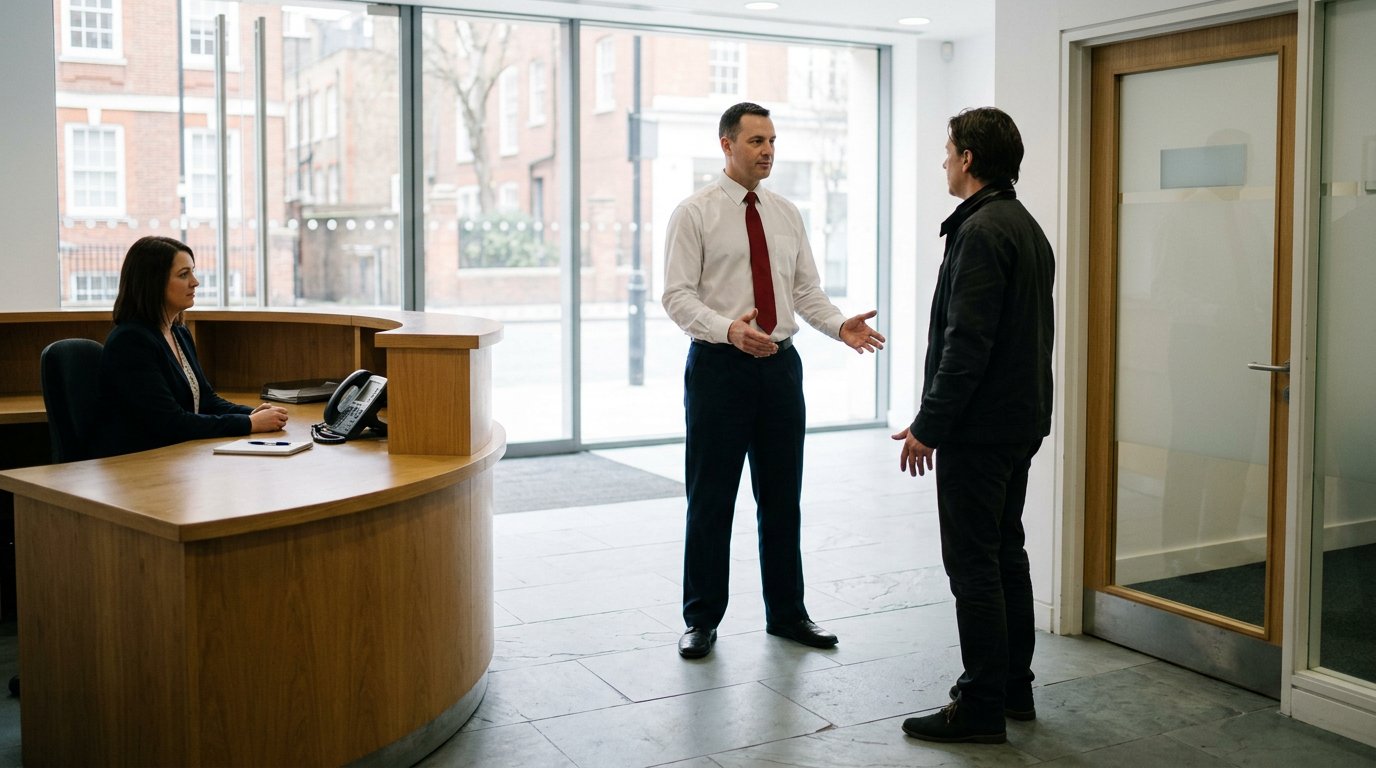
A reception desk is a security control point, not just a place to welcome visitors. Front of house security guards verify identities and credentials, manage authorised entry, and help protect people and premises. They also direct visitors, respond to difficult behaviour and support an orderly response to incidents.
A professional reception should be welcoming and accessible without compromising access control. This balance matters in offices and other workplaces where visitors, staff, deliveries and contractors share an entrance. The key considerations are an officer’s duties, how reception staff handle conflict and emergencies, and how security supports the wider premises. Requirements vary between settings such as offices, universities, libraries and entertainment venues, so match arrangements to the site and its visitors.
Key Takeaways
- Set clear reception procedures for checking visitor identity, confirming authorisation and directing guests appropriately.
- Understand how a calm, procedural response can help manage conflict and support an organised response to an incident.
- Assess reception security as part of the wider premises, alongside access controls and existing security measures.
- Consider how security arrangements should reflect the setting, from corporate offices to public-facing venues and industrial sites.
Customer service and professional visitor interaction
Reception security balances a professional welcome with controlled entry. Each interaction can shape a visitor’s impression of the workplace.
An officer can greet visitors, ask whom they are meeting and give directions. For example, they can contact the host of a guest arriving for a scheduled meeting and direct the guest to the right waiting area. Officers can also answer common questions and support reception staff. Courteous, clear communication helps deliver good service without bypassing access procedures.
Access Control and Visitor Verification
Front of house security guards verify identities and credentials before allowing access. A consistent process records the visitor’s purpose, confirms the relevant contact and distinguishes authorised guests from people without permission to enter. Visitor passes and modern digital sign-in systems such as MyGatePass can support these checks. Staff should also know how to refer exceptions to an authorised contact and follow any site procedures for searches.
Entrance Guard Requirements
Staffing needs depend on visitor numbers, entrance layout, operating patterns and the duties assigned to reception. A single entrance with steady arrivals creates different demands from separate doors handling visitors and deliveries at the same time. Assess the work involved, including access checks, directions, queue management and incident response. Match coverage to the duties at each entrance rather than assuming one fixed staffing level will suit every site.
Construction site reception requires a clear distinction between public-facing areas and operational work zones. Officers can establish a visitor’s purpose, contact the site representative and direct authorised arrivals through the designated process. For deliveries, they can confirm the intended recipient before directing the driver or vehicle. These steps help prevent unverified visitors from entering work areas.
During an emergency, officers should follow the workplace’s procedures, contact the appropriate site representative and keep access routes clear. They should give visitors clear instructions and direct them away from affected areas when required. Defined responsibilities and calm communication support access control, visitor verification and an orderly response.
Conflict resolution and emergency procedures
Reception incidents call for calm judgement and clear escalation. A planned response should protect people and keep communication clear.
Incident and Emergency Response
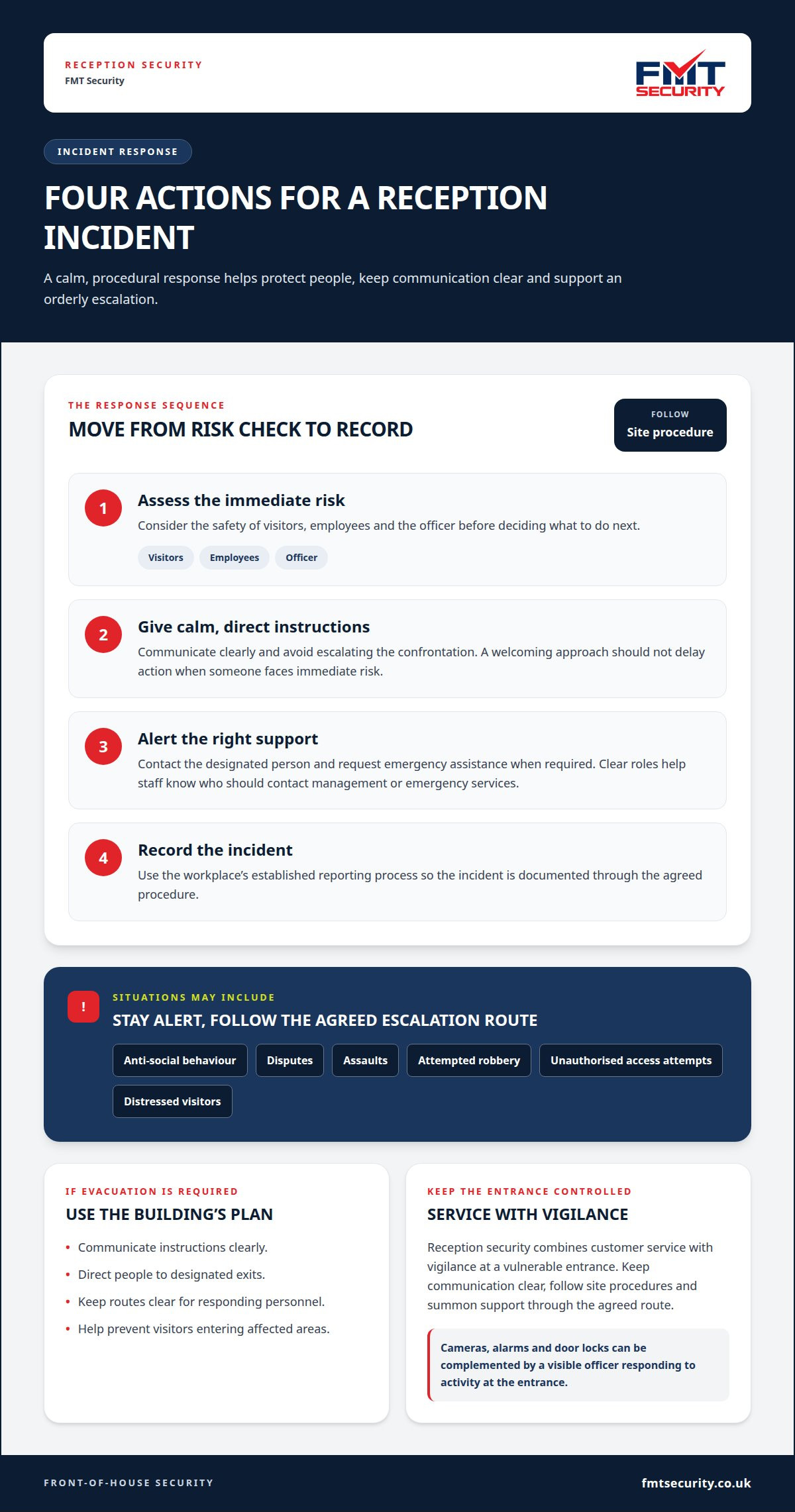
Front of house security guards may encounter anti-social behaviour, disputes, assaults or attempted robbery. They should communicate calmly, stay aware of people nearby and follow the site’s reporting and escalation procedures. A welcoming approach is appropriate, but it should not delay action when someone faces immediate risk. Clear roles help staff know who should contact management or emergency services.
For an incident at reception, a practical sequence is:
- Assess the immediate risk to visitors, employees and the officer.
- Use calm, direct instructions and avoid escalating the confrontation.
- Alert the designated contact and request emergency assistance when required.
- Record the incident through the workplace’s established reporting process.
Risks and Challenges
The role combines customer service with vigilance at a vulnerable entrance. Officers may need to respond to aggressive behaviour, distressed visitors, unauthorised access attempts or competing demands during busy periods. The challenge is to keep reception controlled without treating every visitor as a threat. Procedures should define escalation responsibilities and give staff a clear way to summon support.
During an evacuation, officers should follow the building’s established plan, communicate instructions clearly and direct people to designated exits. They can help prevent visitors entering affected areas and keep routes clear for responding personnel. For example, calm directions during a fire alarm can reduce confusion at the entrance. Procedures should also state who reports the incident and how reception accounts for visitors who arrive during the response.
Reviewing these responsibilities as part of tailored security arrangements can help align reception actions with the building’s procedures.
Cameras, alarms and door locks may not prevent every security incident. Front-of-house officers can complement existing CCTV monitoring, keyholding and alarm response by providing a visible presence and responding to activity at the entrance.
Corporate office reception security
A corporate reception connects public access with occupied offices, meeting rooms and restricted areas. Security arrangements should reflect the building’s layout, visitor flow and established procedures.
When arranging reception security in the UK, confirm that the officer holds an appropriate SIA licence and agree the duties in advance. Set out reporting lines, access procedures, emergency responsibilities and how concerns about performance will be escalated.
Security officers must carry out their assigned duties lawfully and follow site procedures. Their role does not authorise them to exceed those responsibilities or disregard the building’s emergency arrangements.
At a corporate office, reception procedures can distinguish meeting guests from contractors who need access to operational areas. An officer can apply the agreed process consistently, contact the relevant host and record the visit using the workplace’s system. Staff should know who can authorise exceptions, especially when a visitor arrives without an appointment.
Corporate reception procedures should also cover sensitive situations. Reception staff and security officers need clear instructions for confidential deliveries, unexpected visitors and requests to enter restricted floors. Handle visitor information according to the organisation’s procedures, and limit access to people who need it for their duties.
Before deployment, define responsibilities in writing. Useful points include:
- Which entrances the officer monitors and when duties transfer.
- How staff confirm visitor authorisation and manage exceptions.
- Who receives incident reports and makes operational decisions.
- How the officer communicates with reception staff and building management.
- What steps apply during alarms, evacuations or access-control failures.
These arrangements help coordinate reception security with existing CCTV, alarms and door controls. Cameras and locks support oversight, while an officer can respond to behaviour at the entrance and report concerns through agreed channels. Review procedures when the layout, tenant arrangements or access system changes, so responsibilities remain clear.
Front-of-house security across sectors
Front-of-house arrangements should reflect the premises, its visitors and its operating needs. Offices, universities, libraries and entertainment venues each have different access and interaction demands.
For a guarding role, confirm that the officer holds an appropriate, current front-line SIA licence. Check that their experience, communication and incident-reporting skills suit the duties at the entrance.
In the UK, officers should act lawfully and follow their assigned duties and site procedures. Set clear reporting lines and emergency responsibilities before the assignment begins.
The hourly cost of front-of-house security depends on the assignment. Duties, coverage, location and operating times are among the factors considered when preparing a quote.
The price reflects the work required, not simply the presence of an officer. An entrance that needs visitor checks, delivery coordination and incident reporting has different demands from one with narrower responsibilities. Coverage and the premises’ operating pattern also shape the assignment.
Security requirements vary from site to site because layouts, visitor flows and operating needs differ. An office with several access points may need different arrangements from a single-entrance library. Rather than choosing based on location alone, map the duties to the premises, including reception activity, public access and emergency procedures.
Across sectors, the practical assessment should establish:
- Which entrances and areas require a visible security presence.
- How staff and visitors are directed during normal operations.
- Who receives incident reports and coordinates an emergency response.
- How security duties fit with the site’s existing procedures.
These distinctions help organisations specify a service that suits their reception rather than assuming every site needs the same arrangement. Match the officer’s licence and duties to the assignment, then define how the role supports daily operations.
FMT Security: Construction Security
FMT Security provides Construction Security for sites where entrances need to accommodate visitors, contractors and deliveries. For corporate receptions, its Corporate Security service provides manned guarding suited to the office environment and its access requirements.
Construction sites have different priorities from office buildings. Site teams may need an organised entrance process to direct authorised visitors and delivery drivers while helping protect the premises. FMT Security officers support these needs through tailored guarding services. For businesses with both offices and construction sites, the appropriate service depends on the setting and duties required.
Contact FMT Security to discuss your reception or construction site security requirements.
Set a clear standard for your reception
Reception security works best when the officer’s responsibilities are defined alongside the organisation’s daily procedures. Consider how the entrance should operate during routine arrivals, difficult interactions and changes to access arrangements. This gives you a practical basis for deciding what support the premises needs.
Front of house security guards can help maintain a controlled, professional reception when their duties match the site’s needs. FMT Security provides Corporate Security for offices, as well as Construction Security and Industrial Security for other operational settings. The right arrangement depends on the environment and the responsibilities assigned to the security team.
Taking the next step means discussing your premises, entrance requirements and the duties you need covered. A clear conversation can help establish an approach that fits your operational priorities without adding unnecessary complexity. Contact FMT Security to discuss security for your workplace and identify a suitable way forward.
Frequently Asked Questions
So, what are the benefits and duties of a Front of House Security Officer?
A front-of-house security officer combines visitor service with protective duties. Alongside managing entry, the officer provides a visible point of contact, watches for unusual behaviour and reports concerns through the organisation’s procedures. During a busy meeting arrival, for example, the officer can help keep reception orderly while employees focus on their work. They also help apply site instructions consistently.
What does a front of house security guard do?
Front of house security guards provide a staffed security presence at an entrance. Depending on site instructions, their duties may include checking credentials, managing access, contacting hosts, assisting visitors, observing behaviour and escalating incidents. At a multi-tenant office, for example, an officer can direct a guest to the right reception point without allowing access to another organisation’s floors. This keeps access boundaries clear.
What is the difference between front of house security and reception security?
Front-of-house security describes the protective role at a building’s public-facing entrance. Reception security refers more specifically to security integrated with the reception desk and visitor process. The terms often overlap: an officer may cover the entrance lobby as well as the desk, while reception security may focus on arrivals and coordination with reception staff. The exact duties depend on the layout and assignment.
What qualifications and SIA licence does a front of house security guard need in the UK?
A front-of-house guard should hold an appropriate, current front-line SIA licence. Their experience, communication skills and incident-reporting ability should also suit the assigned duties.