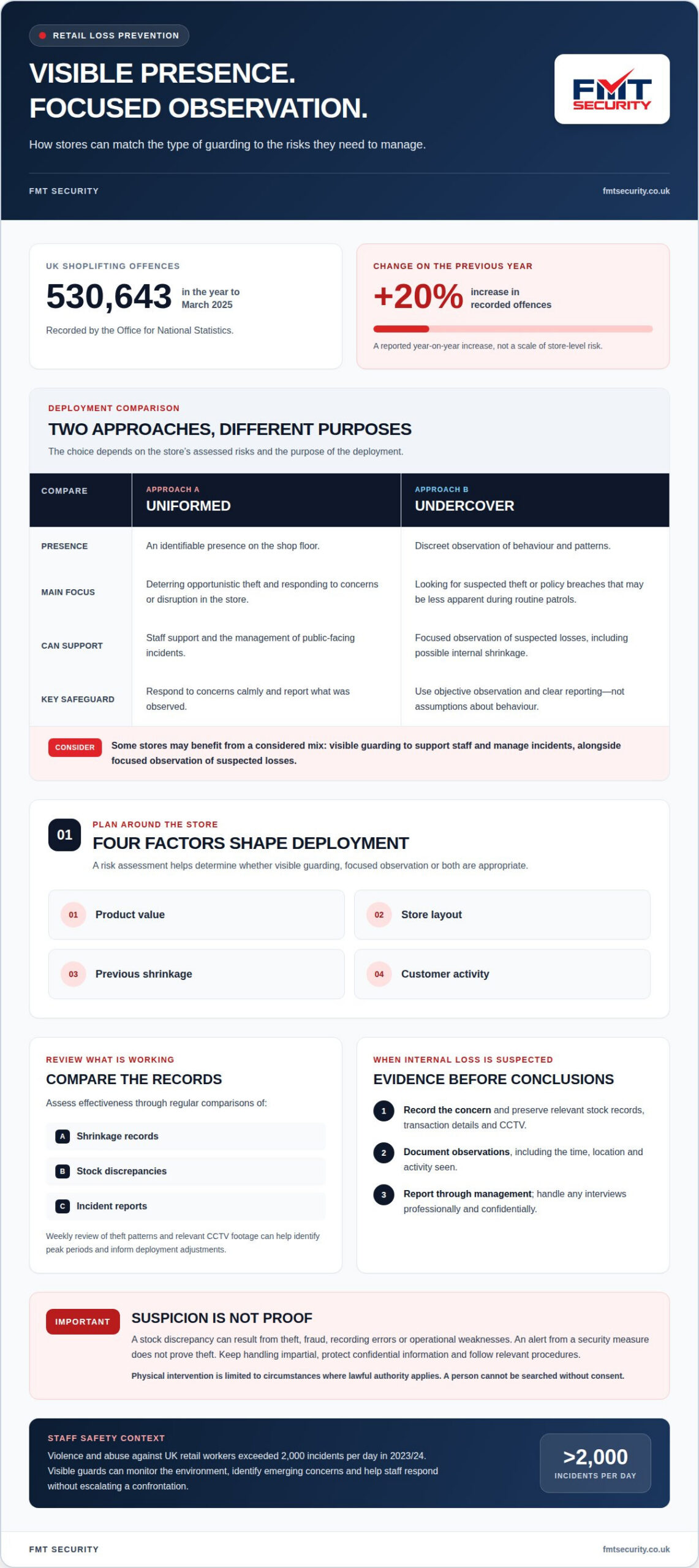
The Office for National Statistics recorded 530,643 shoplifting offences in the UK in the year to March 2025, a 20% increase on the previous year. Retail loss prevention guards help address the wider risks behind these figures by deterring theft, investigating suspected internal losses and supporting staff when incidents arise. Their role is not simply to watch the shop floor; it involves observation, evidence gathering and measured responses to security concerns.
Retailers need to protect stock without letting suspicion or confrontation undermine customer service or staff safety. A clear loss prevention approach helps teams spot patterns, respond consistently and reduce opportunities for loss.
This article explains how retail loss prevention guards support stores, how suspected employee theft should be handled and how visible security can help manage incidents and protect retail teams. It also covers practical steps for planning a guarding arrangement around your store’s risks.
Key Takeaways
- Understand how officers can examine stock discrepancies and suspected internal theft through observation, evidence gathering and clear reporting.
- Learn how visible guarding can support retail staff and help manage conflict through calm, measured responses.
- See how an officer’s responsibilities extend beyond the shop floor to identifying patterns and supporting consistent security procedures.
- Consider how retail security and static guards can provide practical support when theft, safety or disruption creates operational risk.
What is retail loss prevention?
Retail loss prevention combines measures to reduce stock loss with security that supports staff and customers. Police recorded 530,643 shoplifting offences in the UK in the year to March 2025, a 20% increase on the previous year, according to the Office for National Statistics. Retailers can hire licensed guards through a security company or recruit personnel directly, ensuring the role requires an appropriate SIA licence.
Guard Roles and Responsibilities
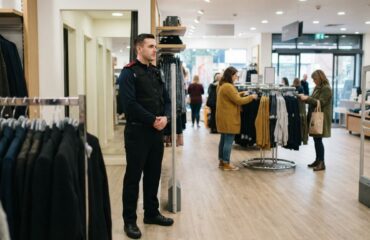
Loss prevention staff review patterns in stock discrepancies, transactions and reported incidents. Security guards provide a visible presence, patrol the store and respond to concerns such as suspected theft or disruption. The right deployment depends on the risk assessment: product value, store layout, previous shrinkage and customer activity all help determine whether visible guarding, focused observation or both are appropriate.
Effectiveness can be assessed through regular comparisons of shrinkage records, stock discrepancies and incident reports. Reviewing theft patterns and relevant CCTV footage weekly can help identify peak periods and adjust deployment. Clear reports also help managers assess whether procedures are being followed and whether recurring risks require a different security response.
Pay varies by role and seniority. These are employee salary ranges, not the cost of contracted retail security. Under the Private Security Industry Act 2001, people working in licensable security activities must hold a valid SIA licence, according to The National Archives.
Visible and Undercover Deterrence
Uniformed security guards deter opportunistic theft through an identifiable presence and can respond to concerns on the shop floor. Undercover officers observe behaviour and patterns discreetly, which may help identify suspected theft or policy breaches that are less apparent during routine patrols. The choice depends on the store’s assessed risks and the purpose of the deployment.
Some stores need visible retail security to support staff and manage public-facing incidents; others may benefit from focused observation of suspected losses. A considered mix can address both. Handle any suspected offence through objective observation and clear reporting, not assumptions based on a shopper’s behaviour.
Employee theft and internal shrinkage investigations
Internal shrinkage can result from theft, fraud, recording errors or operational weaknesses. Investigations should follow the evidence, protect confidential information and distinguish suspicious activity from ordinary work.
Recognising Possible Theft
Loss prevention personnel look for recurring patterns, not isolated behaviour or assumptions about an employee. Examples include unexplained stock adjustments, unusual returns, mismatches between till records and transactions, or repeated access to restricted stock areas. Consider the context: a stock discrepancy may also stem from a delivery or recording error.
Investigators can compare inventory records, transaction data and relevant CCTV footage to establish what happened. Anti-theft tags, locked cabinets and sensor gates can help control access or flag merchandise movement. These measures support an investigation, but an alert alone does not prove theft. Accurate records and impartial handling are essential.
Responding to Suspected Theft
A measured response starts with recording the concern and preserving relevant material, such as stock records, transaction details and CCTV. Personnel can document the time, location and observed activity, then report their findings through the store’s management process. Any interviews should be handled professionally and confidentially.
Clear documentation helps managers distinguish a one-off discrepancy from a recurring pattern and provides a record for any subsequent action. Visible security can help deter shoplifting, while focused internal investigations address suspected losses involving staff. Neither approach should treat suspicion as proof.
Reasonable Force and Theft
In England and Wales, shoplifting is prosecuted under Section 1 of the Theft Act 1968, according to The National Archives. A suspected offence does not itself justify physical intervention. A guard’s actions must remain within the law and relevant procedures, with staff safety and the circumstances of the incident considered.
A security guard may use reasonable force when making a lawful citizen’s arrest. Detention is not a routine investigative step, and a person cannot be searched without consent. Guards should prioritise observation, accurate reporting and appropriate escalation; physical action is limited to circumstances where lawful authority applies. For stores reviewing their response arrangements, a professional security guard service can provide visible personnel and structured incident reporting.
Staff protection and conflict de-escalation
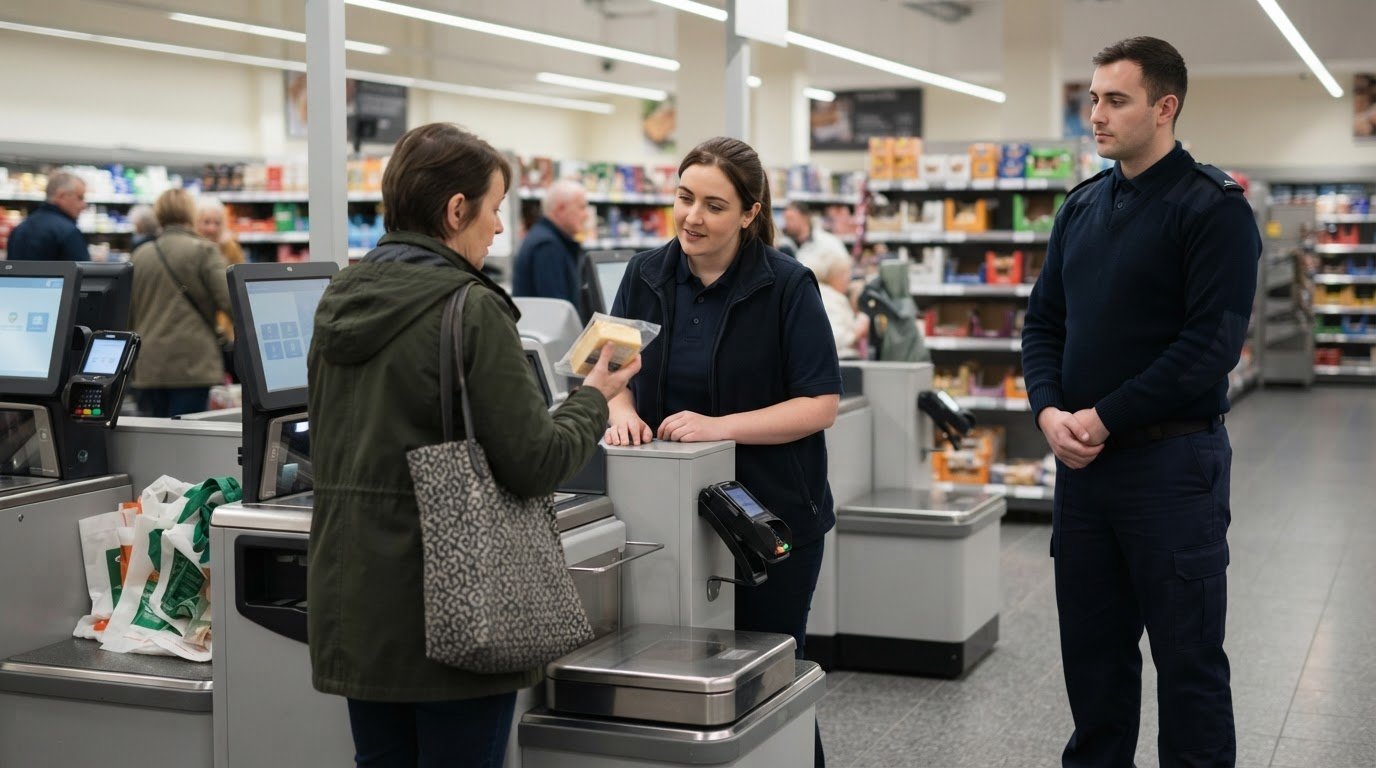
Staff safety depends on early awareness, clear communication and a controlled response to incidents. Violence and abuse against UK retail workers exceeded 2,000 incidents per day in 2023/24. A visible guard can monitor the retail environment, identify emerging concerns and help employees respond without escalating a confrontation.
Situational awareness means noticing changes such as raised voices, crowding near tills or a customer becoming increasingly agitated. Guards can monitor public areas, alert store personnel and position themselves to assist staff. If there is a risk of harm, they can follow incident procedures and contact police when necessary. A calm response helps staff avoid assumptions about suspicious behaviour.
Professional providers plan deployment around the store’s operating conditions and identified risks. They can consider busy trading periods, the layout of entrances and tills, previous incident patterns and areas where staff work alone. Reviewing theft patterns and CCTV footage weekly can help identify peak periods and inform guard schedules. During a busy evening, for example, visible coverage near an entrance and customer service point may support staff handling disputes.
Retail personnel also need clear guidance on reporting concerns, sharing relevant details and following established procedures. Security officers can reinforce loss prevention practices and explain how staff should raise an alarm or request assistance. This supports consistent handling across shifts without asking employees to intervene physically.
Customer relations remain part of effective security. Guards should communicate professionally, explain their presence through calm conduct and avoid treating an alert or unusual behaviour as proof of wrongdoing. Officers trained to de-escalate can listen, give clear directions and create space between people where appropriate. After an incident, a factual record of actions, witnesses and timing helps managers review the response and support affected staff.
Loss prevention officer role in retail
A retail loss prevention officer links daily observation with practical action to reduce future losses. Retail loss prevention guards can review inventory, transaction records and customer activity, then flag patterns that need attention. Repeated stock discrepancies around one process, for example, may indicate a control weakness, an error or possible internal theft. Officers document evidence and report concerns through agreed management procedures rather than treating suspicion as proof.
Surveillance is one part of the role, not its whole purpose. Officers may monitor CCTV, patrol sales floors and observe activity in permitted areas while maintaining professional conduct around customers and employees. Their observations can help managers understand where and when losses occur. Useful reports record the relevant time, location, stock or transaction details, actions taken and any witnesses. This gives managers a clearer basis for reviewing procedures and deciding whether further investigation is appropriate.
Prevention also means turning findings into targeted controls. If records point to a recurring issue during deliveries, managers can review receiving procedures and access arrangements. If incidents cluster in one area, patrols or visible personnel may provide a deterrent. Retail loss prevention guards can reinforce security policies with retail teams and report equipment concerns, helping the business address weaknesses before they lead to repeated losses.
The role has defined limits. A loss prevention officer observes, records and reports suspected criminal conduct; any response must follow applicable law and the organisation’s procedures. This distinction supports fair handling of employees and customers while preserving useful evidence. The practical takeaway is to assess officers by the quality of their observations, reporting and follow-through, not simply their presence. To discuss a retail security arrangement, set out the store’s main risks, operating pattern and reporting requirements.
FMT Security: Retail Security
FMT Security provides Retail Security for businesses that need a visible, professional presence to support staff and protect premises. Retail guarding can help address shop-floor disruption, suspected theft and safe access around customer areas.
FMT Security tailors security guard services to the store’s operating environment, with Static Guards deployed according to its priorities and risk profile. Share details about the premises, trading patterns, incident concerns and the support your team needs. This helps define officers’ duties, deployment and reporting expectations.
Where retail risks require a consistent on-site presence, discuss the requirements and intended outcomes for your premises. Contact FMT Security to discuss retail guarding support.
Set a clear direction for retail security
The next step is to turn identified risks into a clear guarding brief. Set out the areas requiring coverage, the incidents officers may need to respond to and the reports your management team needs. This gives retail loss prevention guards a defined operational purpose and aligns their deployment with your store’s requirements.
FMT Security provides Retail Security alongside Construction Security, Corporate Security and Industrial Security. If your retail premises need a professional security presence, share your operational priorities and the support your team requires. A focused discussion can help define the right approach to your security arrangements.
Contact FMT Security to discuss your retail security requirements. A clear brief is a practical foundation for a more controlled and secure retail environment.
Frequently Asked Questions
How can a professional security provider advise on loss prevention officers and security guards?
Match the guarding arrangement to the store’s operating risks. A shop concerned about public-facing disruption may need visible floor coverage, while recurring stock discrepancies may call for a stronger focus on observation and reporting. Share the premises layout, trading patterns and incident priorities so FMT Security can define officers’ duties, reporting lines and how their presence fits existing store procedures.
How do professional security providers schedule and staff retail guard services?
Plan staffing around the store’s hours, risk profile and required coverage points. A deployment brief can identify entrances, customer service areas, delivery periods and times when staff work alone. It should also define handovers, reporting channels and who receives incident updates. Review the schedule if trading patterns or incidents change, so personnel are assigned where they are most needed.
How can a professional security provider implement an effective store security plan?
An effective plan starts with the store’s vulnerabilities and agreed outcomes. Map key areas such as stockrooms, delivery access and busy customer zones, then define patrol responsibilities, escalation routes and reporting expectations. Management should specify who receives reports and how concerns are recorded. This gives officers and store personnel a consistent framework instead of leaving decisions to the moment an incident occurs.
How can technology support professional loss prevention and security operations?
Technology can help officers observe activity and document security concerns. CCTV may support incident reviews, while electronic tags and sensor gates can alert staff to possible unauthorised merchandise movement. Equipment should fit the store’s procedures: an alert is a prompt to assess what happened, not proof of an offence. Clear guidance on reporting and preserving relevant records helps personnel use available systems consistently.
What happens after detention?
If a detention occurs, focus on keeping everyone safe and seek appropriate help. Contact police where appropriate, and record the circumstances, actions taken and relevant witnesses. Detention does not establish guilt, so handle the facts and evidence objectively. A guard must not search someone without consent. The store can then follow its procedures for documenting the incident and handling any subsequent police enquiries.
What happens when a shoplifter is caught?
Staff should follow the store’s incident procedure and avoid treating an allegation as a proven offence. If someone is lawfully detained on suspicion, police may be called to assess the matter and decide the next steps. Preserve relevant records and document what personnel observed. Handle any decision about a store ban or recovering losses through the retailer’s established process.