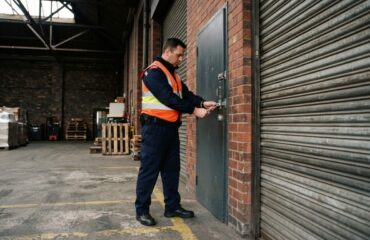
A factory security plan must protect more than the perimeter. Factory security services can combine manned guarding, patrols and monitoring to manage risks to people, stock, machinery, vehicles and site access. At facilities operating around the clock, protection should account for both busy shifts and quieter periods, when valuable assets may remain on site with fewer staff present.
Effective protection reflects how each site operates. A production facility, warehouse and specialist manufacturing site can have different layouts, access points and priorities, so a standard approach may leave risks unaddressed. This article explains why factory security matters, which manufacturing sites can be protected, and how guarding, mobile patrols and monitoring can support operational continuity. It also shows how to match measures to a site’s exposure and daily requirements.
Key Takeaways
- Match guarding and sensor coverage to the site’s layout, access points and operating pattern.
- Use consistent visitor recording and access procedures to help reduce unauthorised entry.
- Shape an industrial security plan around asset exposure, site activity and the protection required during quieter periods.
- When on-site risks call for a security guard service, FMT Security provides security support for industrial, corporate and construction environments.
Do you provide security for different types of manufacturing?
Yes. Security can be adapted to different manufacturing sites, from production floors to vehicle yards. Manned guards provide an on-site presence, mobile patrols check buildings and routes, and CCTV provides visual oversight. Unlike guards, CCTV cannot intervene physically.
Manned Guarding and Factory Patrols
At a factory entrance, security guards can manage access, observe arrivals and respond to activity in person. Patrols add a mobile presence across buildings, loading areas and boundary routes, covering spaces a fixed post cannot. A site assessment should identify vulnerable access points, restricted areas and movement patterns so that patrol routes and other measures reflect the actual layout, not a generic schedule.
Combining Security Guards with Sensors
Infrared sensors can detect people climbing over fences and help monitor a factory perimeter. When an online security sensor detects an anomaly, it can send a report to a monitoring centre operating around the clock. Pairing detection with a guard or patrol gives the alert a practical follow-up: personnel can investigate, assess what has happened and report the outcome. CCTV provides visual context, while sensors signal activity at specific points. Alongside physical response on the ground, safeguarding connected systems and digital assets against modern threats is increasingly important, with providers such as CyberOne offering managed detection and response to protect operational infrastructure. An assessment helps determine where detection is needed and how alerts should be handled.
Static and Night Guarding
A static onsite guard provides a consistent presence at a gate, reception point or other designated post. SIA-licensed security guards can support entry procedures and maintain awareness of activity around that location. Night security guarding is relevant where production continues outside standard daytime patterns or valuable machinery, stock and vehicles remain on site after staff leave. For manufacturing sites operating 24 hours, a thorough plan should distinguish busy shift changes from quieter periods and assign suitable coverage to each.
Why is Factory Security so Important?
Manufacturing sites hold stock, equipment and vehicles across active production and warehouse areas. Clear access procedures help protect employees and assets while supporting operational continuity.
Visitor Records and Authorised Access
A factory access plan should define how visitors and deliveries are identified, authorised and recorded. Security guards can record company and visitor names as they manage entry and exit. For deliveries, procedures should establish the destination and whether the driver is authorised to enter. These records help show who was admitted and where access was directed.
Restricted Production Area Controls
Production lines, storage areas and maintenance spaces may need different access permissions. Practical procedures specify which employees and approved visitors can enter restricted areas, and direct other arrivals to an authorised contact. Apply access controls consistently at staff entrances and internal doors. Clear boundaries help prevent accidental and unauthorised entry, particularly when contractors or delivery personnel move through a busy site.
Warehouse Access and Perimeter Security
Warehouse access checks should cover loading bays, delivery vehicles and staff entrances, not just reception. Guards can manage entry and observe activity around designated access points. Patrols, CCTV, alarms and monitored support can help detect activity around fences and external doors. A site assessment can identify where stock or vehicles are most exposed and focus monitoring accordingly.
Intrusion Detection and Risk Prevention
Factory security combines deterrence, detection and a defined response. Patrols and alarms can help identify attempted trespassing, theft or vandalism, while guards can report incidents for follow-up. Security personnel may also report visible signs of fire, but these measures do not replace fire-safety procedures. Before agreeing a service, UK businesses should review whether insurance covers the contracted activities, what guard training and supervision involve, and how the contract defines duties, reporting and changes to coverage. A tailored factory security plan can bring these controls into one site-specific approach.
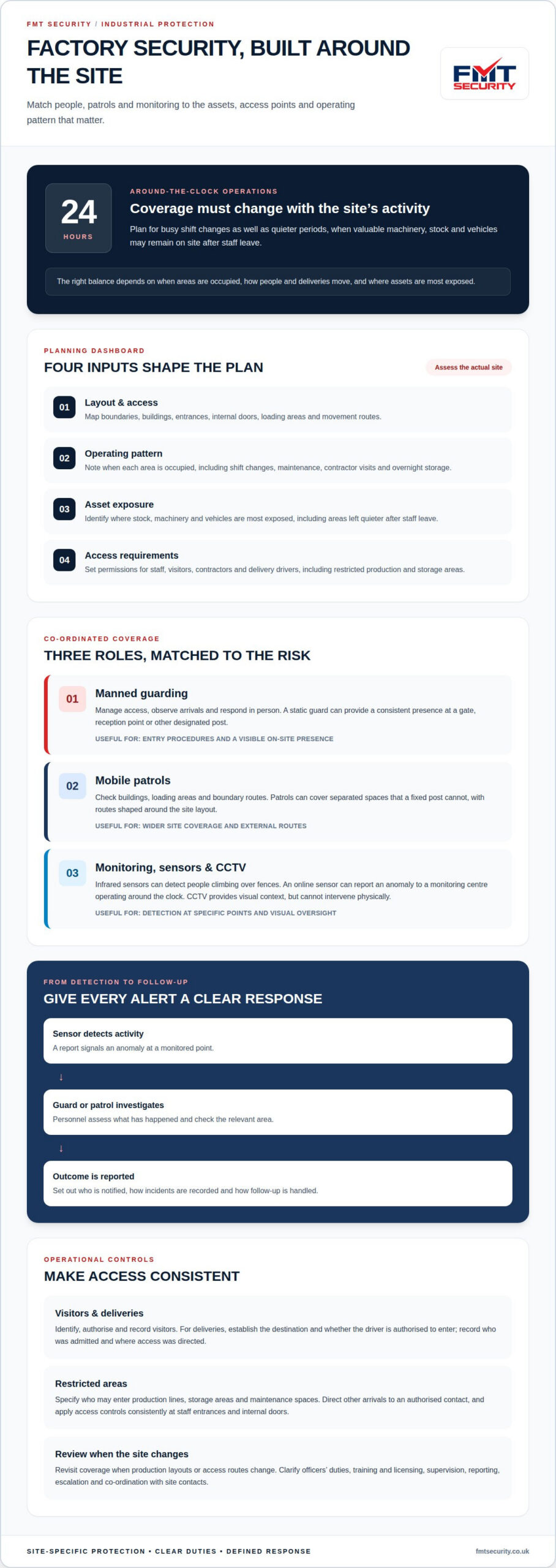
Tailored security plans for industrial sites
An industrial security plan should reflect the site’s layout, operating pattern and highest-risk assets. A factory with machinery, stock or vehicles on site overnight may need stronger out-of-hours protection. An active production site may instead prioritise the movement of staff, contractors and deliveries.
To assess requirements, map the site boundaries, access points, buildings and asset locations, then note when each area is occupied. This helps shape suitable coverage and clarify how officers, patrols, CCTV, access control and remote monitoring can work together.
A tailored plan links each risk to a practical measure. Mobile patrols, for example, can cover separated buildings, while a static post oversees a main entrance. Monitoring can support detection in areas that are difficult to supervise continuously. Response procedures should specify how alerts are assessed, who is notified and how incidents are recorded.
Coverage should reflect changing site conditions. Shift changes, maintenance, contractor visits and overnight storage can create different vulnerabilities. A plan should define when manned guarding is needed, where patrols are useful and what monitoring should cover. It should also explain how arrangements are reviewed when production layouts or access routes change.
When choosing a security service, assess whether the proposed measures address the identified risks rather than relying on a standard package. Clarify officers’ duties, training and licensing, supervision, reporting procedures and escalation process. Agree how the service will coordinate with site contacts and follow access rules. The written plan should make responsibilities clear, including the response to an incident.
These steps turn a broad security requirement into an operational plan: identify exposures, assign appropriate measures and document response procedures. The result should match the industrial site’s actual activity, from busy production periods to times when valuable machinery, stock or vehicles remain on site overnight.
What factors affect the cost of factory security for a UK business?
The resources required for factory security depend on the coverage, site layout and operating pattern. A staffed entrance has different requirements from a large industrial site needing several posts, perimeter patrols and overnight coverage. Risk also matters, including the value and location of machinery, stock and vehicles.
Staffing is a key consideration. A plan may use a static guard at reception, mobile patrols between buildings, or both. The number of posts, hours covered and assigned duties determine the resources required. A site needing access management during shift changes, for example, has different requirements from one prioritising overnight deterrence.
Site complexity also shapes coverage. Multiple entrances, separate warehouses, loading areas and long boundary routes all need consideration when allocating personnel. An assessment helps identify which locations need a continuous presence and which can be covered by scheduled patrols or monitoring. Clear priorities direct resources towards areas with greater exposure.
Service requirements matter too. The scope may include visitor management, incident reporting, patrol records and coordination with site contacts. Changes to coverage or duties can affect the resources required. A clear brief should describe operating hours, access points, priority assets and expected responsibilities, providing a practical basis for a tailored proposal.
The price depends on the case and is given after a quote request, with site size, coverage hours, staffing levels, risk profile and required duties among the cost factors. To discuss a site-specific requirement, request a factory security quote based on the coverage and responsibilities needed.
FMT Security: Security guard service
FMT Security provides security guard services for manufacturing and other commercial sites where a trained on-site presence supports day-to-day protection. Its SIA-licensed security officers deliver Industrial Security, with coverage shaped around the facility, its operating pattern and identified risks.
At a factory, this may mean a static guard at an access point or guarding suited to activity across an industrial site. FMT Security also provides Corporate Security and Construction Security for businesses with different premises and operational requirements. A clear outline of the site, access arrangements and protection needed helps define a suitable service.
If your manufacturing site needs a considered guarding plan, contact FMT Security to discuss its requirements.
Put a site-specific plan into practice
The next step is to turn your factory’s security priorities into clear operational requirements. Consider how protection should support production, staff movement and continuity as the site changes. A practical plan can define responsibilities, reporting expectations and how arrangements should adapt when operations or layouts shift.
Factory security services are most effective when the agreed approach reflects the facility’s actual operating conditions, rather than relying on a fixed template. A focused discussion with FMT Security can help establish the scope of support and the priorities that should shape the arrangement.
FMT Security provides security services for commercial and industrial environments. If you are planning a new arrangement or reviewing existing coverage, discuss your factory’s security requirements with the team. A clear starting point can help you move towards a considered plan for your site.
Frequently Asked Questions
How do you control access to manufacturing facilities?
Control access by defining who may enter each part of the facility and how exceptions are authorised. For example, reception can direct a visiting engineer to a named site contact, while restricting production areas to approved personnel. Clear procedures for lost passes, unexpected visitors and out-of-hours arrivals help employees apply the same rules consistently at every entrance.
How do you coordinate with factory management and emergency services?
Coordination relies on agreed site procedures and clear communication with factory management. Managers can identify relevant contacts, escalation routes and the information officers should record when an incident occurs. Emergency services should be contacted through the site’s established emergency arrangements when required. Sharing current instructions, access details and reporting expectations helps prevent confusion during an urgent situation.
How do you manage security during shift changes and production schedules?
Security arrangements should reflect the factory’s shift pattern, planned maintenance and delivery windows. During handovers, a designated contact can communicate temporary access changes, contractor movements or areas taken out of operation. For example, a maintenance team arriving as a shift ends should have an agreed entry point and authorisation process. This reduces uncertainty without disrupting normal staff movement.
How do you prevent machinery and equipment theft?
Reduce opportunities for machinery theft by controlling access to storage areas and documenting equipment movements. A sign-out process can record who takes an item, its destination and when it is returned. Site management can identify high-value equipment for closer oversight and ensure unusual movements are reported promptly. Clear records help distinguish authorised maintenance from unexplained removal.
How do you protect against internal theft in manufacturing?
Use consistent stock procedures that make discrepancies visible without treating employees as suspects. Separate stock-adjustment authorisation from recording, maintain clear transfer records and review unexplained differences through management procedures. A documented handover between warehouse and production teams, for example, clarifies responsibility for materials and can help identify where a discrepancy occurred.
What factory security services are available in the UK?
Businesses across the UK can arrange security guard services suited to their premises and operational requirements. FMT Security is an Accredited Nationwide Company providing Industrial Security, Static Guards, Mobile Patrol, Key Holding, Construction Security and Corporate Security. A factory’s arrangement may involve guards, patrols or key holding, depending on its needs. Contact FMT Security to discuss the site, required duties and operating arrangements.