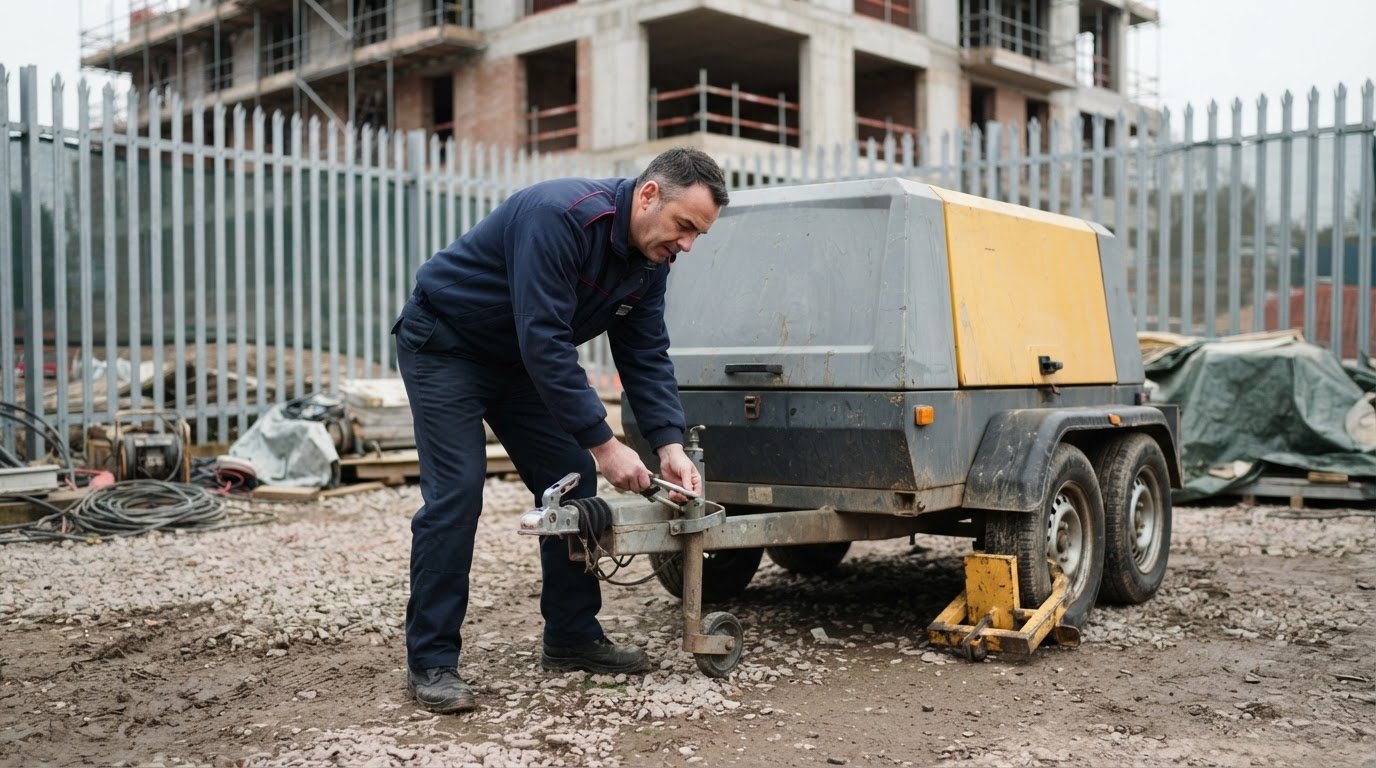
The most expensive asset on site is not always the one that needs protecting first. Effective security for high-value equipment starts with identifying what would be hardest to replace and what loss or interference could disrupt operations. Purchase price matters, but so do availability, production dependencies and the consequences of delay.
Equipment, tools, documents and cash can all create security risks, particularly when they are accessible, portable or essential to a deadline. A practical assessment looks beyond the asset register to consider where items are used, who needs access and how theft could affect business continuity.
This guide explains how to assess asset criticality, identify theft risks and decide what to secure first. It also outlines practical safeguards for workplaces, industrial sites and construction environments, so protection is matched to the assets and risks that matter most.
Key Takeaways
- Prioritise assets by considering replacement difficulty, operational dependencies and the consequences of loss, not purchase price alone.
- Include portable tools, customer-owned components, sensitive documents and cash in your assessment of what needs protection.
- Map where valuable equipment is stored, used and moved to identify exposure across the site and its access routes.
- Match safeguards to the risks, combining physical protection with controlled access, monitoring and clear response procedures.
1. Assessing asset criticality beyond purchase price
Rank assets by the consequences of losing them, not simply their purchase price. A low-cost bespoke fixture may be difficult to replace and essential to every assembly. Assess replacement availability, lead times, production dependencies, quality implications and customer commitments. Theft or vandalism losses can exceed 5% of total project costs, so the assessment should also consider disruption and recovery.
A safe’s rating can help inform an assessment of valuable contents. Treat that rating as one input when assessing valuable contents, not as a complete site security assessment. Record each asset’s description, serial number, owner, location, replacement value and operational role. Include customer-owned components: even a modest batch may be essential to meeting a delivery deadline.
A structured inventory gives teams a practical basis for choosing measures and spotting discrepancies. Keep records current when equipment moves between stores, work areas or vehicles. For example, a maintenance log can record a tool’s serial number, assigned location and authorised issue, making missing items easier to identify and investigate.
Real-time tracking can add movement information to those records. GPS trackers with geofencing can alert rental businesses when equipment leaves designated areas. Use this information alongside clear ownership and location records: tracking alone cannot show whether movement was authorised or who had custody.
UK storage and transport requirements depend on the equipment, its use and the sector. Include relevant legal duties, handling procedures and insurer conditions in the assessment rather than assuming one general rule covers every asset. Protection costs depend on the assets, site exposure, access arrangements and measures selected, so set priorities according to likely loss and operational impact.
If equipment is stolen, report the incident to the police and notify the insurer promptly. Preserve relevant access records and CCTV, then provide identifying details such as serial numbers and tracking information. Review the inventory and access arrangements, record affected operational dependencies, and apply corrective measures to reduce the risk of a repeat incident.
2. Businesses protecting equipment, tools, documents and cash
Production tooling, components and work in progress need protection where they are stored and used. A controlled-access store can keep specialist tooling together, limit handling and support authorised issue procedures. Separate completed work from items awaiting inspection or further assembly, so routine movement does not expose the entire production area.
Set procedures for issuing and returning items: record the item, authorised user, destination and return. Involve production, maintenance, facilities and security teams early so the store fits daily operations. For example, maintenance staff may need access to a particular tool, while production teams need components available without unrestricted entry to storage.
For expensive or irreplaceable equipment, apply safeguards where it is used. Secure portable tools with suitable protector chains and fixed ground anchors where the work area allows. Keep documents containing sensitive operational or commercial information in controlled storage, and restrict cash handling to authorised staff. Clear access records help identify who handled an item.
During transport, secure equipment inside the vehicle so it cannot shift or be seen from outside. At a worksite, return tools to locked storage when unattended, and remove them from vans overnight where practical. Keep vehicle loading and unloading within a managed area rather than leaving valuable items exposed beyond the site perimeter.
Protecting an asset also means limiting avoidable damage. Use designated storage positions for delicate instruments, and keep components away from traffic routes or handling equipment. A simple sign-out procedure can distinguish equipment in active use from items that should be stored. For sites with valuable equipment moving through shared areas, site-based static guarding can support oversight of access and activity.

High-value equipment to secure
Start with assets that are portable, valuable or difficult to replace. In a workshop, these may include diagnostic equipment, specialist power tools, calibration instruments and production machinery. Consider each item’s operational role as well as its purchase price: even a modestly priced tool can halt work if no substitute is available.
Include laptops, tablets and mobile phones used for business. These devices can contain sensitive information and provide access to business accounts and records. List each device, its assigned user and usual storage location, then identify where it may be left unattended, such as a shared office, vehicle or reception area.
Construction and industrial sites should account for generators, compact machinery, attachments and tools moved between work zones. Record serial numbers and mark equipment so individual items can be identified. Include hired and customer-owned assets, since responsibility may differ from ownership and a missing component can delay work or affect delivery.
Retail premises have different exposure points. Assess stock with high resale value, small items displayed near exits, cash awaiting banking and devices used for transactions. Map these against the shop floor, stockroom and delivery access. This helps distinguish goods that need secure storage from items requiring closer oversight during trading.
Documents also warrant attention when they contain commercially sensitive information, customer details or records needed for operations. Identify paper files, removable storage devices and original certificates, then consider who needs access and where each is kept. A lost document may be difficult to replace even if its purchase cost is low.
Use a simple prioritisation test for each asset: could its loss disrupt operations, expose sensitive information, delay a customer commitment or make replacement difficult? Items that meet several of these criteria deserve attention first. This directs security measures towards actual business impact rather than treating every purchase as equally critical.
4. What security measures protect high-value equipment from theft?
Match each safeguard to the theft route and the asset’s normal use. Keep laptops, tablets and mobile phones with staff where possible. Otherwise, store them out of sight or lock them away when unattended. A laptop lock can secure a device to a fixed table or another immovable object.
For portable tools, record serial numbers and apply permanent identifying marks. These details help distinguish company property and support tracing if equipment is stolen. Security tags can trigger a radio signal when an item passes beyond a designated security zone, making them useful in controlled retail areas.
For mobile phones, record the IMEI number. If a phone is stolen, report that number to network providers so they can blacklist the device. For equipment moved around a site, GPS tracking with geofencing can alert rental businesses when an item leaves its designated area.
Physical protection must cover the whole route into a store or production area. Assess walls, doors, overhead access, service openings and connections to surrounding structures. A robust wall will not secure equipment if a less-protected opening offers another route. Combine suitable barriers with access control, intrusion detection, monitoring and clear response procedures.
Operational controls matter too. Keep access records for locks and safes current, and change passcodes regularly. Position equipment so staff can see it during use, then return it to controlled storage when work ends. At a high-risk site, coordinate these arrangements with the people responsible for access and incident response.
Effective security for high-value equipment relies on layered measures, not a single device. Identify the asset, restrict access, secure likely entry routes and establish how staff will respond to an alert. Discuss site security measures to consider how these controls can work together at your premises.
FMT Security
FMT Security provides tailored security guard services for businesses protecting valuable equipment at construction, corporate and industrial sites. Its officers support site procedures by monitoring access, observing activity and helping maintain controlled working areas. This is particularly relevant where equipment is stored, moved between work zones or used in restricted-access areas.
For an event or operating business, appropriate arrangements depend on the site, the assets exposed and how people use the space. FMT Security provides manned guarding aligned with operational needs, helping businesses maintain consistent oversight alongside existing security measures.
If you need support protecting equipment at your premises, contact FMT Security to discuss your requirements.
Put your security assessment into practice
A risk assessment should guide operational decisions, not remain a static document. As equipment, staff responsibilities and site layouts change, review whether existing controls still suit the way work is carried out. Assign responsibility for updates and incident follow-up so security arrangements remain connected to day-to-day operations.
Security for high-value equipment is strongest when physical oversight supports existing procedures. FMT Security provides Construction Security, Corporate Security and Industrial Security for businesses seeking manned guarding tailored to their premises and operational requirements. This can help when access oversight and a consistent site presence are part of the wider approach to protecting assets.
Take the next step by discussing the site, the assets at risk and the working arrangements that security needs to support. Contact FMT Security for advice and move towards a considered, practical plan for your premises.
Frequently Asked Questions
How do you implement and integrate security solutions?
Implement security by assigning responsibility for each control and defining how it connects to normal operations. For example, specify who authorises contractor access, who records equipment movements and who receives incident reports. Document escalation routes and shift handovers. A short site procedure should explain what staff do if access is refused, an item is unaccounted for or an alert needs investigation.
How do you maintain and monitor security systems?
Maintain security systems through scheduled checks, recorded faults and clear ownership of follow-up actions. For example, a site log can capture an alarm test, an access-control fault, the person notified and the resolution. Review incident and fault records together: repeated problems at one entrance may point to a procedural weakness. Staff should know how to report a failure and what interim arrangements apply.
Need advice on secure storage?
Choose storage according to who needs access, how often items are used and what could happen if they are exposed. A maintenance team may need controlled access to shared tools, while confidential project files require restricted handling. Keep storage arrangements consistent with daily work and define who can authorise exceptions. This helps prevent informal access practices from weakening otherwise sound procedures.
What security equipment options should you evaluate?
Evaluate options by their intended role, compatibility with site routines and the evidence they create. For example, consider whether an access-control measure records entry, whether an alert reaches a responsible person and how faults are identified. Assess installation constraints, maintenance responsibilities and staff use before adopting equipment. A device that disrupts essential work or lacks a defined response procedure may not address the underlying risk.
How should high-value equipment be assessed and classified for security?
Use an internal classification that helps staff apply consistent handling rules. A business might label assets as routine, restricted or critical, then document what each category means for access, movement and sign-off. Make the definitions practical: a critical item could require named custody, while routine equipment follows standard issue records. Review classifications when operational roles or asset use changes.
What are the best physical security solutions for valuable equipment?
The most suitable physical measures depend on the asset, its location and how staff use the area. Consider whether protection should focus on delaying unauthorised access, controlling movement or maintaining a visible presence. For example, a store used by several teams may need defined entry permissions and accountable key custody. Coordinate physical safeguards with work schedules so security procedures remain practical during normal operations.