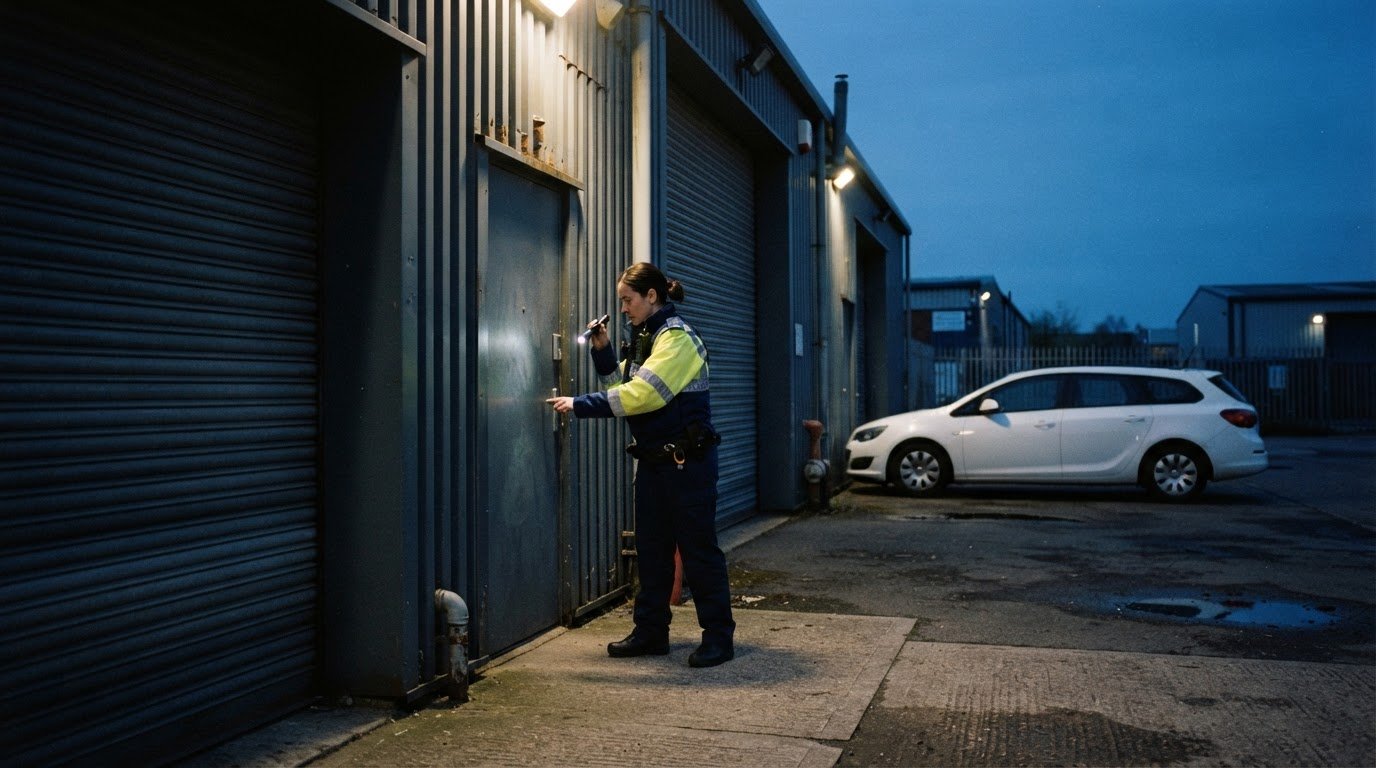
The value of a patrol lies in its timing and visibility, not continuous presence. Random security patrols for businesses use mobile officers who visit at variable times, inspect agreed areas and record their findings. This creates a visible deterrent without keeping an officer on site. The patrol plan should reflect when the premises are most exposed and what needs checking.
A scheduled visit can still be useful, particularly at closing time or before the working day begins. Additional variable visits make attendance less predictable, while clear instructions ensure officers know which access points, boundaries and hazards to check.
This article explains how mobile patrols operate, what shapes a suitable patrol strategy and how alarm response can fit into the arrangement. It also compares mobile patrols with static guarding and explains the records businesses can expect, including visit logs, completed checks and incident reports. These details can help you assess whether patrols suit your premises.
Key Takeaways
- Shape patrol visits around when your premises are most vulnerable and the areas officers need to inspect.
- Clear instructions help officers respond consistently to routine checks, unusual activity and alarm activations.
- Mobile patrols provide an intermittent visible presence; static guarding is suited to sites that need continuous on-site coverage.
- Useful patrol records show when visits took place, what was checked and whether officers found incidents or hazards.
What should determine your patrol strategy?
Set patrol timings and checks around the site’s specific risks, rather than relying on a standard timetable. With random security patrols for businesses, the aim is to provide a visible deterrent and a defined response if officers find a problem.
Patrol Visibility and Deterrence
A visible patrol vehicle signals that a business site is being monitored and can discourage opportunistic criminal activity. For example, a marked vehicle passing through a commercial estate can make unauthorised access less attractive. Officers can also inspect vehicle entrances, perimeter fencing and loading areas, helping identify attempted entry or damage rather than relying on visibility alone.
Variable Timings and Unpredictability
Variable patrol timings make attendance harder to predict than visits at the same time each night. A business might schedule a check at closing, then vary later visits across vulnerable periods. This uncertainty can support deterrence because someone watching the site cannot rely on a predictable gap. Clear instructions are still essential, so officers know which areas to inspect on each visit.
Risks, Limitations and Incident Response
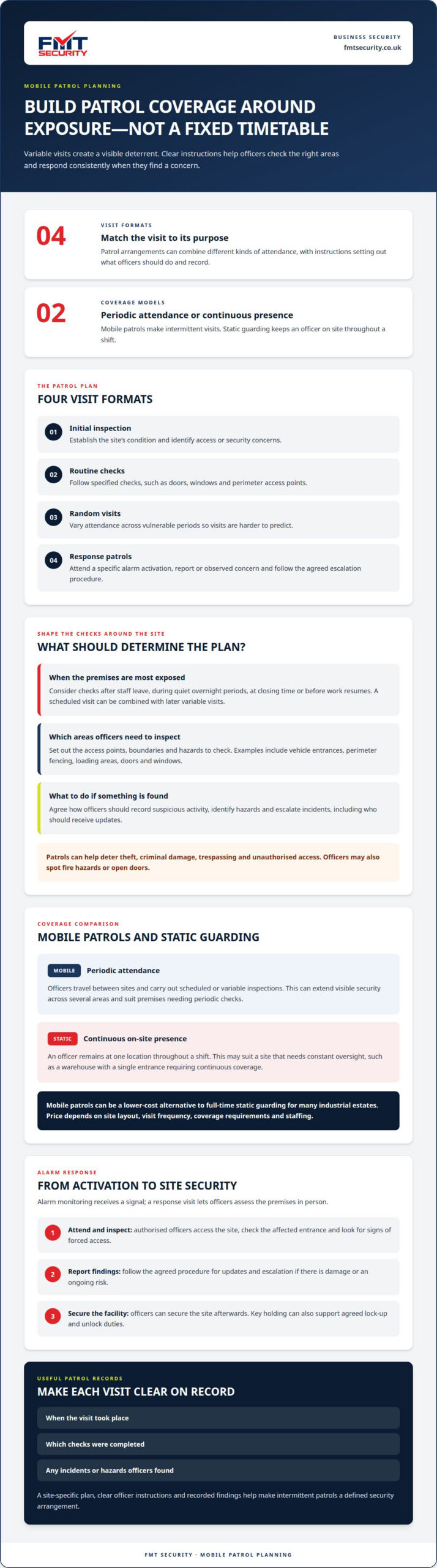
Patrols can help deter theft, criminal damage, trespassing and unauthorised access. Officers may also spot fire hazards or open doors, and can follow agreed procedures to record suspicious activity and escalate incidents. What risks can random patrols help address? Their visible presence and early detection can reduce opportunities for these offences. Patrols do not provide continuous supervision between visits, so a site that needs constant coverage may require static guarding instead.
Service Coverage and Out-of-Hours Patrols
Out-of-hours patrols are organised around a business’s operating pattern and site exposure. A UK business might prioritise checks after staff leave, during quiet overnight periods or before work resumes. Are business security patrol services available across the UK, including out of hours? Patrol arrangements serve UK business premises, with timing and checks shaped by the site and its security requirements. The patrol plan should specify access points and the response expected if officers identify a concern.
Can you respond to alarms as part of the patrol service?
Yes. Mobile patrol officers can attend alarm activations or reports of suspicious activity, inspect the premises and follow agreed escalation procedures. FMT Security also provides key holding and alarm response, enabling authorised officers to access a site when required, investigate an activation and secure the facility. This gives businesses a defined response without requiring staff to attend each activation themselves.
Patrol arrangements can include different types of visits. An initial inspection establishes the site’s condition and highlights access or security concerns. Routine visits follow specified checks, such as doors, windows and perimeter access points. Random visits add unpredictability, while response patrols focus on a specific activation, report or observed concern. Clear instructions help officers distinguish these duties and record their findings.
Alarm monitoring and physical attendance serve different purposes. Monitoring receives an alarm signal; a response visit allows officers to assess the premises in person. After an activation, for example, officers can check the affected entrance, look for signs of forced access and report whether the building appears secure. The response procedure should specify who receives updates and what happens if officers find damage or an ongoing risk.
Key holding can also support lock-up and unlock duties. Officers can secure doors after closing or provide access at an agreed time, then complete the required checks. If an alarm activates, holding the keys supports entry for an investigation and lets officers secure the site afterwards. These arrangements can operate alongside routine or variable patrols, depending on site requirements. A defined mobile patrol arrangement can bring attendance, key access and alarm response into a clear operational process, helping protect business assets and reducing the need for staff to manage out-of-hours activations.
Security Patrol vs Static Guarding: Which Is Better?
Mobile patrols provide an intermittent presence, while static guarding keeps security officers on site throughout a shift. The right option depends on whether your premises need repeated checks or continuous coverage.
Mobile Patrols and Static Guarding
Mobile patrol officers travel between sites, conducting scheduled or variable inspections, while a static guard remains at one location. For a business with several buildings, mobile visits can extend visible security across multiple areas. A warehouse that needs constant oversight at a single entrance may benefit more from on-site guarding. The practical difference is straightforward: patrols provide periodic attendance, while static guards provide a continuous on-site presence.
Patrol and Guarding Costs
Mobile patrols can be a lower-cost alternative to full-time static guarding for many industrial estates. They can suit sites needing periodic checks rather than continuous officer coverage, while guarding assigns dedicated presence to the premises. The price depends on site layout, visit frequency, coverage requirements and staffing, and is provided after a quote request. This comparison helps businesses align security provision with operational exposure, not assume one model fits every site.
Comparing Patrols with Other Security Measures
How do random patrols compare with static guards, CCTV and alarm response? Patrols provide physical inspections at intervals; static guards remain on site, CCTV provides visibility between visits, and alarm response sends officers to investigate activations. These measures can complement one another. For example, CCTV may identify activity, an alarm may trigger attendance, and officers can inspect access points in person.
The British Standards Institution states that the UK mobile security services code of practice is BS 7984-3:2020. It also states that UK security companies must comply with British Standard 7499 for security guard services. Do UK security patrol guards need an SIA licence? According to UK Government, a guard needs an SIA licence if their work is part of a contract for services and involves a licensable activity.
Time-stamped reports, photos and incident logs
Patrol records document attendance, completed checks and findings, giving businesses a traceable account of activity across their premises. To arrange patrols, define visit timings, inspection points and reporting expectations, then review the reports against the planned schedule.
Time-Stamped Reports and Incident Records
A time-stamped report records when officers attended, what they inspected and any issues they identified. Digital records may include GPS verification, photographs, incident details, maintenance concerns and security recommendations. For example, a photograph of damaged fencing can add context to an incident log and help identify a repair need. Clear records distinguish routine observations from incidents requiring follow-up.
Premises Checks and Patrol Monitoring
Premises checks should reflect each property’s access points and operational risks. Officers can record checks of doors, windows, gates, perimeter fencing and vehicle entrances, as well as hazards such as faulty lighting or obstructed emergency exits. How can businesses arrange and monitor random patrols? Set inspection priorities and reporting instructions, then review time-stamped records, GPS verification where used, and findings against the planned visits.
Useful reporting links each visit to an accountable record. A business can review whether officers attended as planned, which checks they completed and whether incidents or maintenance issues remain outstanding. If a report notes an open door, for instance, it should describe what officers observed and the action taken under the agreed procedure. This gives the relevant site contact a clear basis for follow-up.
For premises with several access points, consistent report categories make records easier to review across visits. Separate entries for security incidents, damage and maintenance concerns help distinguish urgent matters from routine defects. Photographs provide context, while written notes explain what officers observed. Reviewing these records can help businesses identify recurring issues, such as perimeter damage or lighting faults, and adjust inspection priorities.
Arrange mobile patrol reporting that records attendance, checks and relevant site findings.
FMT Security: Mobile Patrol
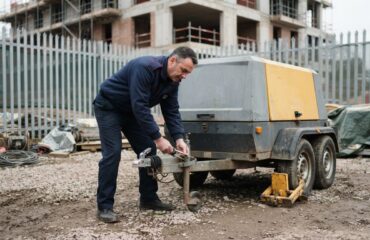
FMT Security provides mobile patrols for businesses seeking a visible, mobile security presence without continuous on-site guarding. The service can support construction sites, corporate premises and industrial locations, where access points, operating patterns and property risks shape the patrol approach. It may suit organisations that need regular site checks or a more variable attendance pattern to complement existing security arrangements. FMT Security can tailor patrol arrangements to the premises and the checks required, giving officers clear priorities for each visit. For a site requiring continuous on-site coverage, static guarding may be a more appropriate option. If mobile patrols fit your operational requirements, contact FMT Security to discuss your site’s security needs.
Set the Next Stage of Site Protection
The next step is to turn your site’s priorities into a practical security arrangement. Consider which locations need mobile visits, where continuous on-site coverage matters and how patrols should fit existing procedures. This gives your organisation a clear basis for deciding whether random security patrols for businesses meet its operational needs.
FMT Security provides Construction Security, Corporate Security and Industrial Security. These services support different commercial environments, from building sites to offices and industrial premises. The right arrangement depends on the site, its exposure and the coverage required. Patrols are not a substitute for continuous guarding where an on-site presence is essential.
For a discussion focused on your premises and security requirements, speak with FMT Security about patrol arrangements. A considered plan can help you take the next step with a clearer view of how security should support your operations.
Frequently Asked Questions
How does mobile patrol security work?
Mobile patrol security assigns officers to visit business premises and inspect agreed locations. A deployment brief can identify priority areas, such as a warehouse vehicle entrance or a building’s loading bay, and explain how officers should report concerns. Patrols can cover multiple properties, with attendance records helping businesses review whether planned checks took place and what officers observed.
Do the laws in the UK require security patrols?
Businesses are not generally required to use security patrols, although requirements can depend on the industry and its security standards. Patrols are a security measure, not a universal legal obligation. Consider the requirements that apply to your sector and premises, then decide whether patrols are appropriate for managing site-specific risks.
How often do patrols take place?
Patrol frequency depends on the site’s operating pattern, areas of exposure and checks required. A UK schedule might include visits at 10pm, 2am and 5am, with additional variable visits where appropriate. Businesses can also prioritise checks around operational changes, such as staff leaving or the start of the working day, rather than relying only on evenly spaced visits.
How should a warehouse in a remote location in the UK be patrolled?
A remote warehouse can use a layered approach that combines mobile patrols with remote surveillance. Patrol instructions can prioritise perimeter boundaries, vehicle access, storage areas and signs of damage, while surveillance provides visibility between physical visits. Alarm response can add an attendance procedure for activations. The plan should reflect the warehouse layout, operating hours and assets most exposed to unauthorised access.
Is this service suitable for my type of business?
Mobile patrols can suit businesses that need periodic physical checks, including construction sites, corporate offices and industrial facilities. A retail site might prioritise entrances and delivery areas, while an industrial property may need perimeter and vehicle-access checks. The key consideration is whether intermittent visits meet the site’s needs or continuous on-site guarding is operationally necessary.
Scheduled or Random Patrols: Which Approach Is Right for Your Site?
Scheduled patrols suit checks tied to known operational events, such as securing a site after a shift ends. Random visits can make attendance less predictable during other vulnerable periods. A combined approach may work well: keep a planned closing check, then vary later visits. Clear instructions should still define what officers inspect and how they record unusual findings.