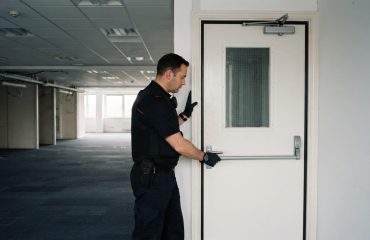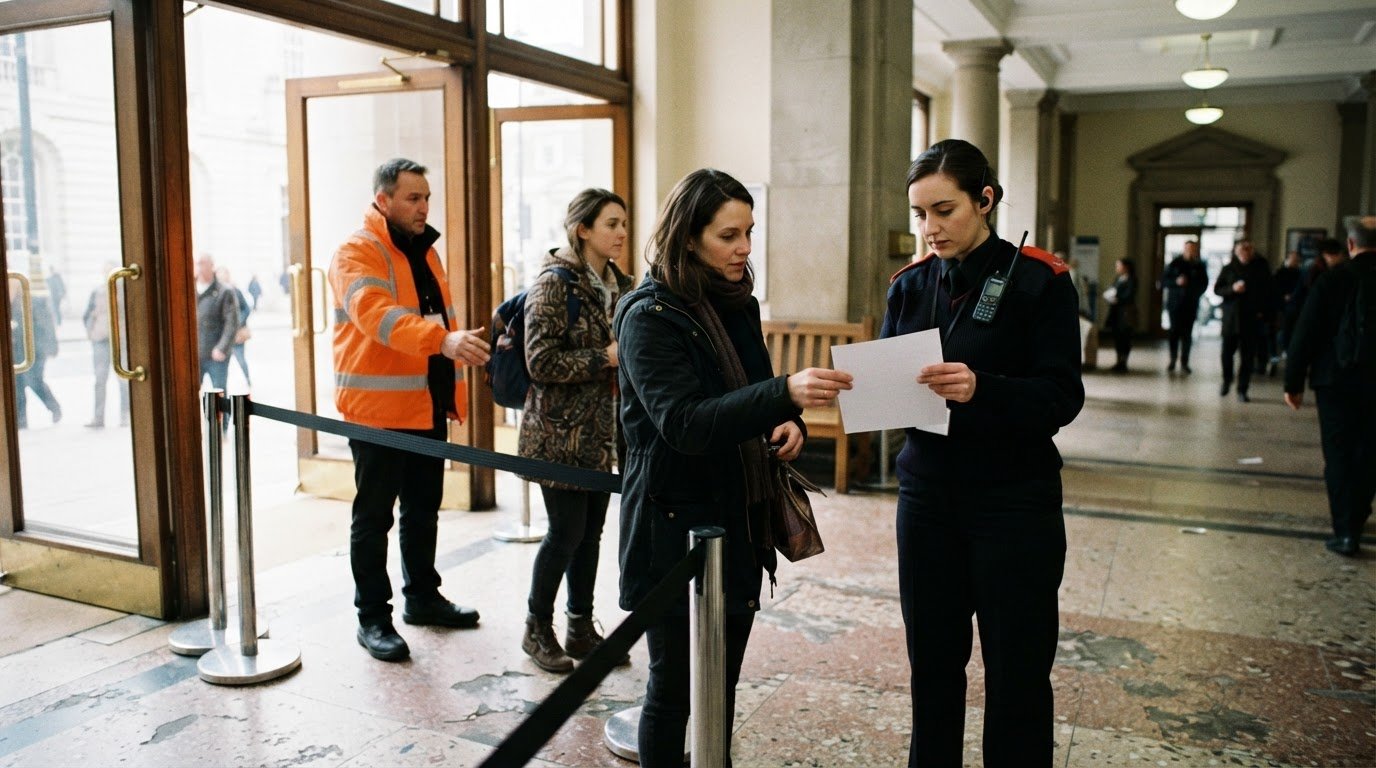
Event security is about more than responding when a problem occurs. Event security staff help control access, support safe movement through busy areas, identify potential threats and manage confrontations calmly. During an emergency, they can assist with an orderly evacuation and contact emergency services.
At a public gathering, a visible security team can help people move through entrances and exits in an orderly way. Effective arrangements also rely on clear coordination between security officers, stewards and the wider event team.
This article explains what event security involves, how attendance, venue and risk shape staffing, and how officers and stewards can work alongside emergency services. It also covers practical responsibilities that help keep an event controlled, from managing access and crowd movement to responding when conditions change.
Key Takeaways
- Staffing needs depend on expected attendance, venue type and the level of risk, with crowd movement and potential pinch points shaping deployment.
- Access control can include checking tickets and identification, managing entry points and screening for prohibited items.
- Officers and stewards have distinct responsibilities, and clear communication helps them manage changing conditions in a coordinated way.
- During an emergency, security teams can support an orderly evacuation and contact emergency services as part of the response.
Crowd management
The number of security staff needed depends on expected attendance, venue type and assessed risk. At gatherings with hundreds or thousands of visitors, professional crowd management can help maintain safe movement and reduce the risk of overcrowding.
Crowd Monitoring
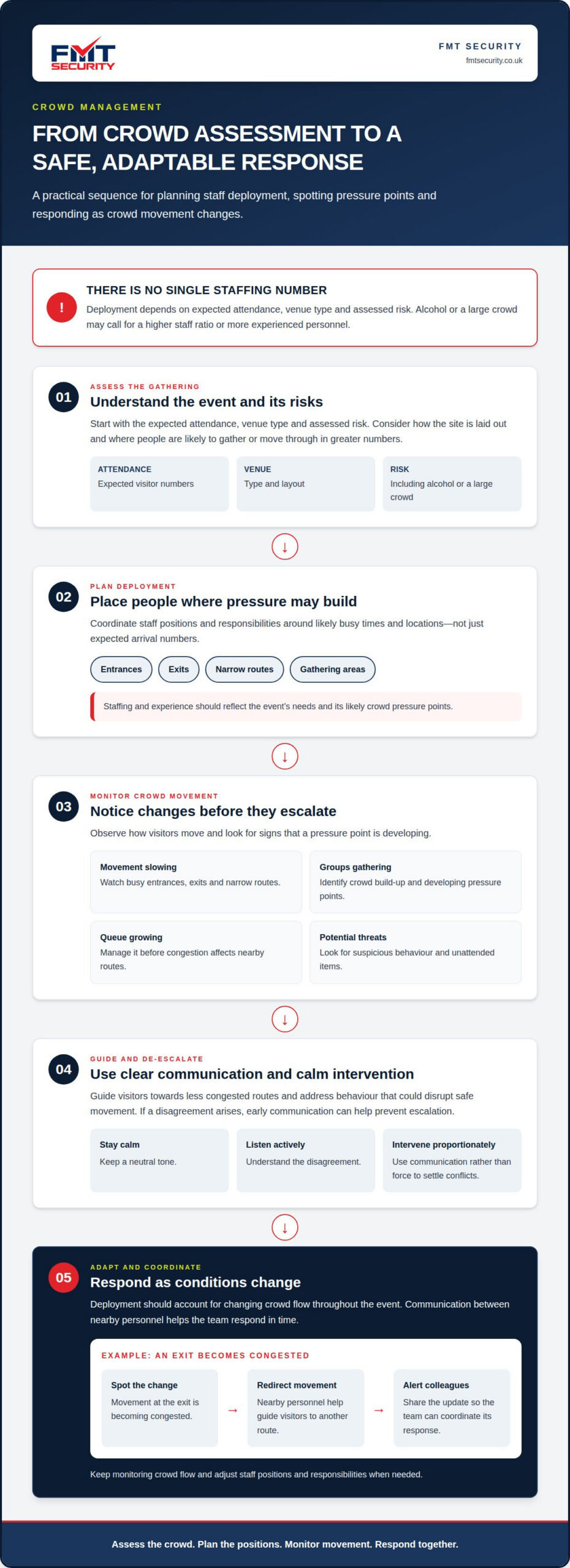
Monitoring involves observing how visitors move around an event and identifying developing pressure points. Staff can watch busy entrances, exits and narrow routes, then respond if movement slows or groups begin to gather. They also look for suspicious behaviour, unattended items and other potential threats. For example, staff can manage a growing entrance queue before congestion affects nearby routes.
Crowd Control and Conflict Management
Effective crowd control combines clear communication with calm, proportionate intervention. Staff can guide visitors towards less congested routes and address behaviour that could disrupt safe movement. If a disagreement arises, a neutral tone, active listening and an early conversation can help prevent escalation. Visitors may outnumber officers, so recognising tension promptly and coordinating a response are important.
Security Staffing Requirements
There is no single staffing number suitable for every gathering. Expected attendance, venue layout and assessed risk all influence deployment. Factors such as alcohol or a large crowd may call for a higher staff ratio or more experienced personnel. Organisers should consider these needs alongside likely pressure points, including entrances, exits and areas where visitors may gather.
Deployment should account for changes during the event, not just expected arrival numbers. Staff positions and responsibilities can be coordinated around busy times and locations, with communication enabling timely responses. If an exit becomes congested, for example, nearby personnel can help redirect movement and alert colleagues. This helps the team respond to changing crowd flow and emerging concerns.
Because event guests may outnumber security officers, guards may need to address conflicts before they become dangerous. They should handle confrontations calmly, using communication skills rather than force to settle disagreements. De-escalation can involve staying calm, maintaining a neutral tone and listening actively. Guards also monitor for suspicious people, unattended items and other potential threats to the event and its guests.
What is Event Security?
Event security includes practical measures to regulate entry and help protect visitors, staff and the venue. At a festival, duties may include ticket checks, screening and monitoring access points.
Access Control and Ticket Verification
At entrances, officers can check tickets and identification, manage queues and control entry. This helps prevent unauthorised access and directs visitors to the right areas. Screening may include bag searches for prohibited items, while checkpoints provide controlled entry and exit points. Organisers should brief the team on the site layout, access routes and expected attendance so staffing reflects the event’s arrangements.
Accreditation also requires clear access categories. Organisers should identify which groups need entry, such as visitors, staff or performers, and explain how credentials will be recognised. A defined process helps officers respond consistently when someone arrives without the required ticket or accreditation.
Staff Qualifications and SIA Licensing
Most event security guards in the UK are licensed and trained by the Security Industry Authority (SIA). The relevant duties and access-control responsibilities should be clear when personnel are assigned, so their role matches the event’s operational requirements. For organisers, the practical consideration is whether staff are prepared to carry out their allocated duties and follow agreed procedures.
Laws, Licensing and Security Plans
SIA licensing is an important consideration for event security in the UK. Licensing requirements depend on the duties being performed, so an event plan should define staff roles rather than treating every steward or security officer as interchangeable. Clear role descriptions help establish who manages entry, screening and accreditation.
To develop an event security plan, organisers should provide expected attendance, venue type, site layout, access points and the event’s risk profile. Include accreditation arrangements and explain any prohibited items that screening should address. These details help shape a deployment around the actual venue and event. For professional support with public gatherings, explore event security support.
Coordination with emergency services
At a public gathering, the security team can contact emergency services, assist people leaving the premises and support an orderly evacuation. Clear communication helps responders receive useful information about the incident and site access.
Emergency procedures should identify who reports an incident and who guides visitors. During a medical emergency, for example, staff can alert responders, direct them to the location and keep routes clear. A power outage may require staff to relay instructions and help people move safely. Everyone should understand these responsibilities before the event begins.
Customer service is also part of the response. Officers may need to give calm, direct directions to visitors who are anxious or unsure where to go. The security team should communicate consistently with organisers and stewards so instructions do not conflict. Agreed reporting channels also help staff share updates, such as a blocked access route or an area that needs to be cleared.
When choosing an event security provider, assess how clearly it explains the proposed deployment, communication arrangements and emergency procedures. Look for a practical plan that reflects the venue, event activities and risks, rather than a generic staffing proposal. Clearly defined responsibilities and escalation routes are useful signs of a well-organised approach.
Arrangements vary according to expected attendance, venue type and risk level. A small indoor gathering and a large outdoor festival have different layouts, access points and movement patterns, so security services should reflect those conditions. The plan should also account for event-specific factors, such as alcohol service or particular visitor groups, which may affect staff experience and deployment.
Event security services can be tailored to the operational demands of different gatherings. Before the event, organisers can provide the site layout, schedule, expected attendance and known risk factors. The provider can use these details to plan staff positions, coordinate with stewards and establish how the team will support emergency responders if conditions change.
Event security officers and stewards
Event security officers, stewards and door supervisors have different functions, although some duties may overlap. Officers focus on security tasks, such as monitoring access and responding to incidents. Stewards generally guide visitors, direct movement around the venue and support orderly access. Door supervisors may manage entry and behaviour at a venue entrance. The event plan should define each role clearly.
Most event security guards in the UK are licensed and trained by the Security Industry Authority (SIA). Organisers should allocate duties according to staff roles and experience, rather than assuming every person can perform the same function. The public has no legal right to receive a security staff member’s name or SIA number, so clear role identification and supervision matter during an event.
Coordination makes these distinctions practical. At a concert, a steward might direct visitors to a designated entrance while an officer monitors access and reports a security concern. If congestion develops, stewards can guide movement as officers manage the security issue and communicate with the event lead. Agreed reporting arrangements help staff share information without confusing visitors or duplicating tasks.
Deployment should reflect the venue, expected attendance and risk level. A large outdoor gathering may need stewards along visitor routes and officers at access points or other areas of identified risk. Alcohol, particular visitor groups or crowd size can affect the required staffing ratio and experience. Clear briefings should explain who gives directions, who handles security incidents and how concerns reach the event lead.
For a public gathering, discuss event security arrangements with FMT Security, including venue layout, attendance and staff responsibilities.
Staffing discussions can also cover team composition and the terms associated with officer work. Organisers can use this information to review proposed arrangements and confirm responsibilities before deployment.
Some event security teams include unarmed guards and professionally trained armed guards. Team composition should reflect the defined duties and event requirements, so personnel match their planned responsibilities. Clear agreement on roles and employment terms supports a consistent briefing and helps the event lead understand what the team is expected to provide.
FMT Security: Event Security
FMT Security provides Event Security for public gatherings that need professional on-site security and a planned approach to event risks. The service supports organisers who need officers to assist with access arrangements, monitor activity and coordinate with stewards and emergency responders.
Deployment can be tailored to the venue, expected attendance and operational requirements. Organisers can share the site layout, schedule and identified risks so security arrangements reflect how the event will run. FMT Security also provides Construction Security, Corporate Security and Industrial Security for clients with needs across different environments.
For event security arrangements tailored to your public gathering, contact FMT Security.
Plan the next step for your gathering
Treat security planning as part of event operations, not an isolated booking. A clear brief helps align deployment with the venue, schedule and responsibilities of the wider event team. It also provides a practical basis for discussing how event security staff can support the gathering from arrival through departure.
FMT Security provides Event Security, alongside Construction Security, Corporate Security and Industrial Security. To begin, outline the event format, site arrangements and operational priorities. This gives the discussion a focused starting point and helps identify the security support required, without assuming every gathering needs the same approach.
Share your event requirements and discuss a suitable way forward with Contact FMT Security. A measured planning conversation can help you move towards a more organised event, with responsibilities considered before the day begins.
Frequently Asked Questions
What are the roles of event staff?
Event teams divide operational, visitor-facing and security duties. Organisers coordinate the programme and communicate decisions; stewards guide visitors and support orderly movement, while security officers handle assigned security tasks. Catering and production teams focus on their own services or equipment. If an activity changes, for example, the organiser communicates the update, stewards direct visitors and security personnel maintain their assigned posts.
What do event security staff do at events?
Event security staff help protect people and venues through access checks, bag searches, perimeter observation and crowd safety duties. They also identify concerns and pass information through agreed event communications. If an officer spots damage to a perimeter barrier, for example, prompt reporting allows organisers to assess the issue and direct an appropriate response under the event plan.
What risks and responsibilities do event security staff face?
Key risks include crowd pressure, confrontations, suspicious behaviour, unattended items and operational emergencies. Officers need to stay alert, communicate concerns calmly and work within their assigned responsibilities. If visitors receive conflicting instructions during a disruption, for example, staff can use the agreed reporting route to clarify direction with the event lead and help reduce confusion.