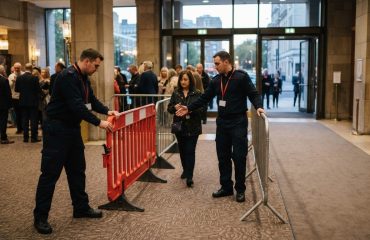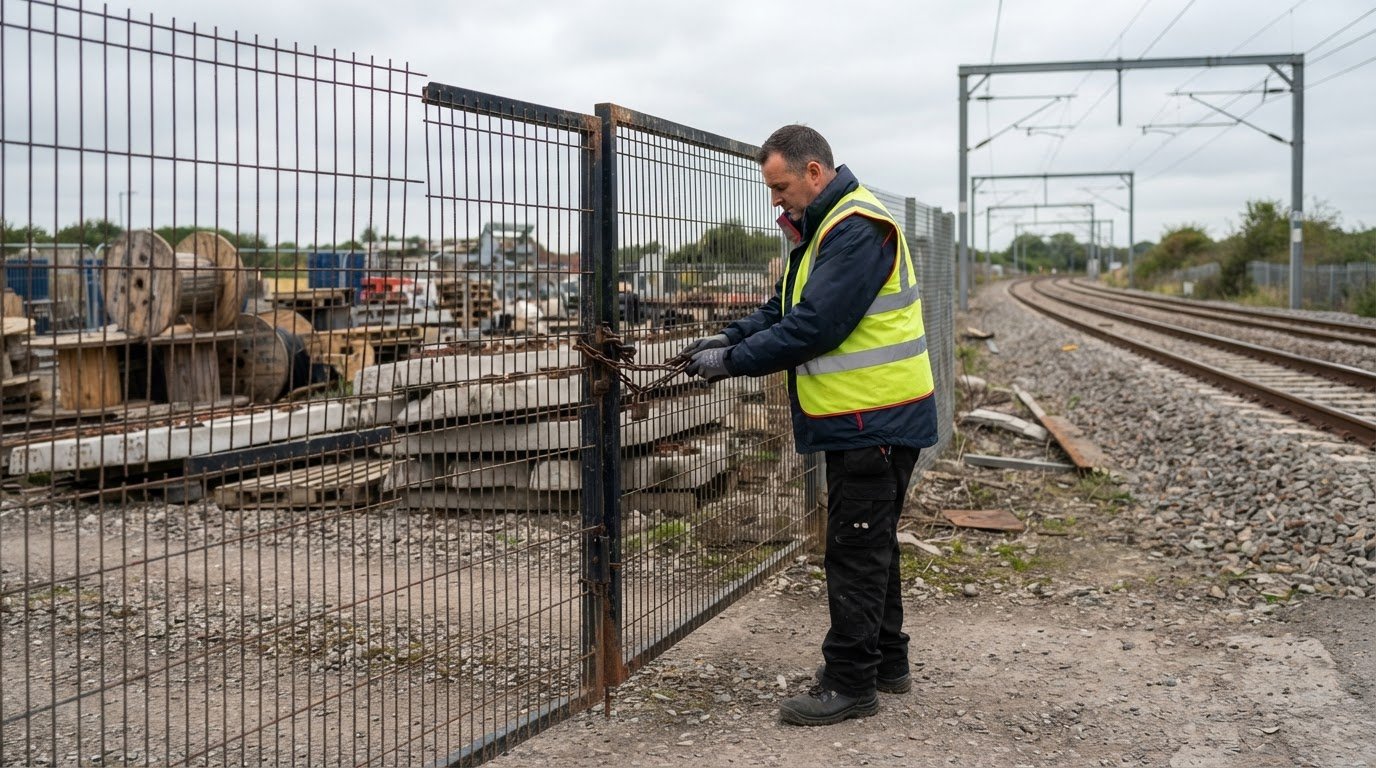
Rail construction security protects both the work and the railway. Rail infrastructure project security guards help deter trespass and theft, control access to active sites and safeguard equipment essential to project delivery.
Construction and maintenance sites can contain valuable materials, exposed infrastructure and areas where unauthorised access creates operational risks. A visible security presence supports orderly site activity and helps identify concerns before they disrupt work.
This article explains how guards protect railway infrastructure, equipment and construction sites, and how risk assessments shape deployment. It also covers security standards, monitoring, factors that affect service requirements and how FMT Security’s construction and building site security can support a rail project’s operational needs.
Key Takeaways
- Understand how a project risk assessment can shape protection for railway infrastructure, equipment and site access.
- Learn how security credentials and monitoring standards support consistent oversight across a rail project.
- See how guarding arrangements can be tailored to construction activity, site layout and changing operational risks.
- Identify when static guards and construction security can help maintain site security during rail works.
Protection of rail infrastructure and equipment
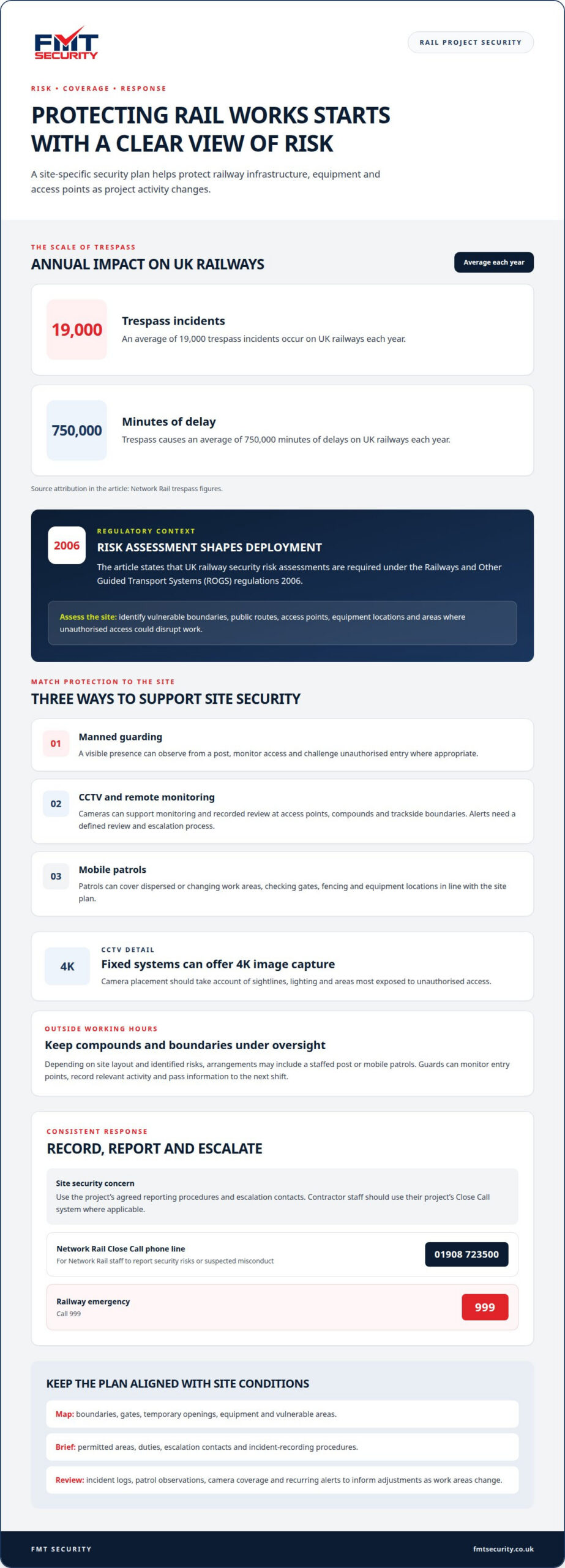
Rail sites combine operational boundaries, valuable equipment and areas where unauthorised access can disrupt work. UK railway security risk assessments are required under the Railways and Other Guided Transport Systems (ROGS) regulations 2006, according to The National Archives (legislation.gov.uk).
Trespass and Track Protection
Trespass causes an average of 19,000 incidents and 750,000 minutes of delays on UK railways each year. Guards help protect tracks by observing access points, challenging unauthorised entry where appropriate and reporting suspicious behaviour through agreed site procedures. The assessment should identify vulnerable boundaries, nearby public routes and locations where people could approach the network or a station. Clear escalation arrangements help staff respond consistently.
Protection also covers equipment stored beside the line or within a construction compound. Copper cable, tools and materials can attract theft, while vandalism can damage assets and interrupt planned work. Guards can monitor vehicle and pedestrian access, record movements and report missing or damaged items. A site-specific plan should map equipment locations and establish who receives incident reports, so emerging threats are not overlooked during shift handovers.
Mobile patrols can oversee dispersed work areas where one fixed post cannot cover every access route. Patrols should reflect the project layout, current activity and risks identified in the assessment. Officers can check gates, fencing and equipment areas, then record and escalate concerns under the agreed procedure. Near sensitive works, guards can also help maintain controlled boundaries around workers and operational areas.
Out-of-Hours Site Protection
Outside working hours, unattended compounds may contain plant, materials and equipment with little natural oversight. Depending on the site layout and identified risks, arrangements can include a staffed post or mobile patrols. Guards monitor entry points, check that access remains controlled and record relevant activity for the next shift. At sites beside an operating railway, instructions should distinguish construction areas from railway access and explain how to escalate concerns.
Security certifications and monitoring standards
On Network Rail sites, deployment should follow the project risk assessment, access arrangements and reporting procedures. Guards need clear instructions on permitted areas, escalation contacts and incident recording.
Credentials support consistent service, but do not replace site-specific preparation. SIA licensing is relevant to manned guarding, alongside a documented induction and clear role instructions. A security plan should define who supervises officers, how incidents are logged and who receives urgent reports. These steps support accountability when shifts change or work areas move.
CCTV adds visibility at access points, compounds and trackside boundaries. Fixed systems can offer 4K image capture, which may help operators distinguish detail in recorded footage. Camera placement should reflect sightlines, lighting and the areas most exposed to unauthorised access. Monitoring procedures should also identify who reviews alerts and how footage is handled under the project’s established arrangements.
Remote monitoring is most useful when alerts trigger a defined response. An operator can assess an alarm, establish its location and escalate it to the designated site contact. The response plan should distinguish equipment faults from suspected intrusion, then record the decision and action taken. Clear escalation reduces uncertainty and supports a consistent response to incidents that could disrupt work.
Rail perimeter monitoring requires attention to fence lines, gates, temporary openings and routes near active work. Patrol observations and camera coverage can be coordinated around changing site conditions, rather than treating the boundary as fixed. For example, a gate used for deliveries may need closer observation during access periods, followed by a documented status check.
Monitoring arrangements should define coverage, functioning equipment, alert records and reviewable incident logs. Project teams can use these records to identify recurring behaviour, blind spots or repeated alarm activations. Regular reviews can inform adjustments to camera positions, patrol focus and escalation instructions, keeping protection aligned with current site conditions.
Security services for railway construction projects
Railway projects need security services matched to site access, work schedules and risks such as trespass or vandalism. Rail infrastructure project security guards can support controlled access, monitor designated areas and follow agreed procedures for recording and escalating concerns. Deployment should reflect the project layout and operational requirements.
Manned guarding provides a visible presence and direct observation from a post. CCTV supports monitoring and recorded review, while mobile patrols cover separate or changing areas. Rail infrastructure project security guards can form part of a combined arrangement, with the balance shaped by site conditions, access points and risks at each work phase.
Incident reporting should follow the project’s agreed escalation route. Network Rail staff can report security risks or suspected misconduct through the Close Call phone line, 01908 723500. In a railway emergency, call 999. Contractor staff should use their project’s Close Call system where applicable.
Remote sites can present practical challenges, including dispersed work areas and fewer routine movements around compounds. A security plan should identify access points, equipment locations, communication routes and the contact responsible for receiving reports. For example, a patrol record can note an unsecured gate and pass the concern to the designated site contact.
Railway-specific preparation should cover assignment procedures, boundaries and reporting channels. Security personnel also need clear instructions about their duties and escalation responsibilities. Railway staff have separate security awareness needs, including recognising unusual behaviour, reporting unattended items and understanding local evacuation procedures.
Staff should know how to recognise a potential threat message and what to do if one arrives. Network Rail personnel can ask their line manager for an individual or group security briefing. These arrangements help employees respond consistently and ensure concerns reach the appropriate person.
Rail security specialism means aligning guarding arrangements with railway site procedures, access controls and incident reporting. The provider’s role should be defined by project requirements, not a generic deployment.
Construction and maintenance site security
Rail construction sites change as work moves between compounds, access roads and trackside locations. Rail infrastructure project security guards can help keep coverage aligned with these changes, provided the site plan identifies current access points, equipment locations and work phases. Reviewing arrangements when the layout changes helps keep controls relevant.
Maintenance work brings similar demands, particularly when teams use temporary storage or move between locations. Guards can monitor agreed entry points, observe site activity and record concerns for the responsible contact. A handover should identify unresolved issues, such as damaged fencing or an uncollected delivery. This gives incoming personnel a clear record and reduces the chance of an open concern being overlooked.
Unauthorised access can affect workers, equipment and planned activity. Rail infrastructure project security guards need clear instructions on site boundaries, permitted routes and escalation procedures before deployment. If someone approaches a restricted work area, the response should follow site rules without interfering with railway operations. Accurate reporting helps the project team distinguish a security concern from routine activity.
Coverage should reflect the location and type of work, rather than apply the same arrangement to every site. A staffed entrance can manage access at a compound, while mobile patrols can observe separate storage areas. CCTV may support monitoring of a fixed boundary, but it does not replace physical checks where conditions require them. An agreed response route should identify who receives alerts and how incidents are recorded.
Project teams can help keep deployment aligned by providing current access arrangements, work locations and updates when site activity changes. A site map marking entrances, restricted areas and equipment storage gives guards a practical reference. This supports coordination between the site team and security personnel. To discuss construction site security arrangements, outline the project locations, work phases and principal access concerns.
FMT Security: Static Guards
FMT Security provides Static Guards and Construction Security for projects that need a defined on-site presence. A static guard can support controlled access, observe activity from a designated post and report concerns through agreed site procedures.
This approach suits railway construction or maintenance locations where a fixed entrance, compound or equipment area needs consistent oversight. Deployment can be tailored to the site layout, working arrangements and project instructions. FMT Security’s security guard service also supports organisations that need structured guarding in commercial environments.
Before deployment, the project team can provide site access arrangements, relevant boundaries and escalation contacts. These details help establish clear responsibilities and align guarding with site operations. Contact FMT Security to discuss static guards for your project.
Plan security around the next project phase
Rail projects evolve as work areas, access arrangements and operational priorities change. Align security coverage with the next phase by identifying the locations requiring attention, responsibilities and reporting routes for emerging concerns. This gives project teams a practical basis for reviewing arrangements as work progresses.
Selecting rail infrastructure project security guards should be part of forward planning, not a decision separate from site operations. FMT Security provides Construction Security, Corporate Security and Industrial Security for organisations with security requirements across project and business environments. The right arrangement depends on the site’s operational needs and the scope of protection required.
To discuss your requirements, contact FMT Security about rail site security. A clear discussion about the project’s locations, work phases and priorities can help establish a disciplined next step for safeguarding operations.
Frequently Asked Questions
Why is railway and train security essential?
Railway security helps protect people, infrastructure and continuity of service. Planning also addresses risks to equipment and work areas, where unauthorised entry can interrupt project activity. Effective arrangements coordinate access controls, staff reporting and site oversight with the railway’s operational environment.
What security guard services are needed on UK rail infrastructure projects?
Services depend on the site’s layout, operating phase and identified vulnerabilities. A project might need a staffed gatehouse to manage deliveries, guards at a compound storing equipment, or patrol coverage for separate work locations. The plan should define duties, handovers and reporting routes. For example, delivery procedures can identify authorised vehicles and direct unexpected arrivals to the designated site contact.
What qualifications and certifications do rail project security guards need in the UK?
Officers undertaking licensable guarding work need the relevant SIA licence. FMT Security’s officers are SIA-licensed and trained to meet SIA standards. Railway-specific requirements depend on the assignment and site rules. The project induction should explain permitted work areas, access arrangements and escalation procedures, so officers understand the boundaries of their duties before deployment.
Do rail security guards need an SIA licence and railway safety training?
An SIA licence is relevant to licensable security duties, while railway safety preparation addresses the specific site and role. These are distinct parts of deployment. A site induction can cover local access controls, restricted areas, communication channels and emergency arrangements. The project should clarify which instructions apply to guards and how they coordinate with railway personnel as work changes.
How are rail infrastructure sites assessed for security risks?
A site assessment considers the work location, access routes, boundaries, assets and surrounding activity. It should account for changes as construction progresses, such as a temporary compound moving or a new delivery entrance opening. Under the Railways and Other Guided Transport Systems (ROGS) regulations 2006, UK railway security risk assessments are required. Reviewing the assessment as conditions change keeps controls aligned with the project.
What security measures protect railway construction sites from theft, trespass and vandalism?
Measures can combine controlled entry, checks of authorised access, suitable guarding arrangements and clear incident records. For example, a site can record equipment movements at a compound entrance and investigate discrepancies through its reporting process. Network Rail’s national survey found that 38% of respondents wrongly believed electrocution from tracks would not cause serious injury, underlining the importance of preventing unsafe access as well as asset loss.