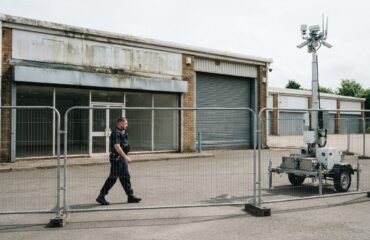
The right security guard services depend on your site’s layout, activity and access requirements. A static guard can oversee a designated post, while mobile patrols cover multiple areas or locations. The Security Industry Authority (SIA) regulates the UK private security industry and licenses individuals in roles including security guarding, door supervision and close protection.
Construction sites, corporate offices and retail premises face different operational risks, so security guard services should reflect the specific environment. This guide explains which options suit construction, corporate, retail and residential settings, how static and mobile cover work, and what information helps when requesting a quote. It also outlines how to align the required duties with your premises and security priorities.
Key Takeaways
- Match site cover to its access points, operating patterns and specific vulnerabilities, rather than choosing a guard arrangement by default.
- Use mobile patrols to monitor different areas across a site, and consider static guarding where a fixed post or entrance needs attention.
- For a construction site, account for changing risks as work progresses and materials, equipment and access requirements shift.
- Prepare site details and the cover required when requesting a quote, so the proposed arrangement can reflect your operational needs.
Security for construction, corporate, retail and residential sites
Construction, corporate and retail sites each require cover shaped around their access points and daily activity. At a building site, officers can monitor entrances where vehicles, contractors and deliveries arrive. In an office, a fixed reception post can manage visitor access and report concerns. Retail security focuses on the shop floor, entrances and customer-facing areas. Across London and the wider UK, the sector and site layout influence which arrangements are practical.
Residential security serves a different purpose from commercial cover. A neighbourhood patrol can provide a visible presence along agreed routes and report issues such as damaged gates or suspicious activity. In a block of flats, an officer may be positioned at the main entrance to observe access and respond to incidents in shared areas. These arrangements focus on communal spaces, not private homes.
Residential and concierge security combines a staffed reception with controlled entry procedures. For example, a concierge can receive visitors, record relevant details and direct them to the right part of a building. This differs from personal security, which focuses on an individual’s safety and movements. The distinction matters: a residential building may need lobby cover, while someone facing specific risks may require another form of protection.
Commercial security covers workplaces and customer-facing premises. Corporate Security can suit an office where reception access and staff movement need oversight. Retail Security may be appropriate when officers need to monitor shop-floor activity and entrances. Construction Security addresses changing site conditions, including deliveries and access routes that shift as work progresses.
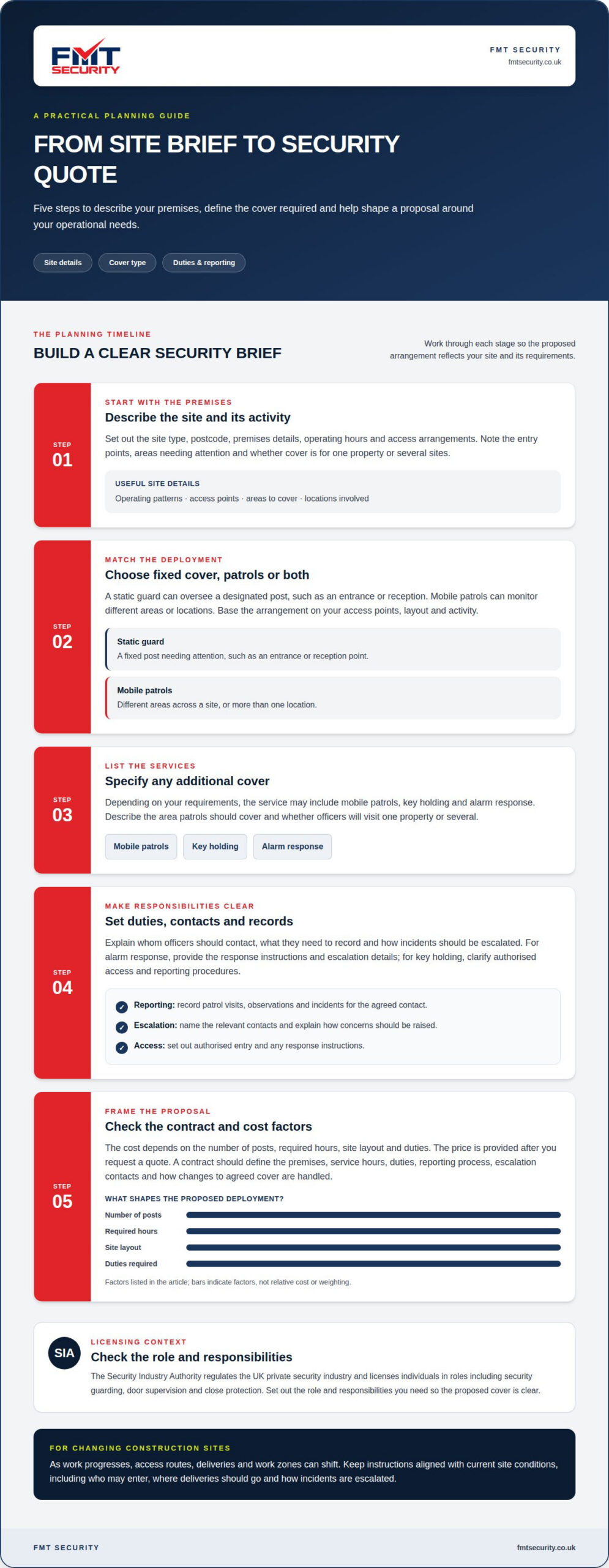
To define your requirement, identify the site type, entry points, operating hours and areas needing attention. Then decide whether a fixed post, mobile patrols or both best suit those conditions. Clear communication is essential: officers need to know whom to contact, what to record and how to escalate an incident. This assessment helps align cover with the premises instead of applying the same arrangement to every site.
How Can I Request a Quote on Security Services?
When requesting a quote, describe the premises, operating requirements and areas needing cover. Depending on your site’s needs, security guard services can include mobile patrols, key holding and alarm response.
Security Hiring and Contract Considerations
When choosing UK security guard services, assess whether the proposed duties and reporting arrangements suit your site. The Security Industry Authority licenses individuals in roles including security guarding, door supervision and close protection. Set out the role and responsibilities you need so the proposed cover is clear.
A security services contract should define the premises, service hours, duties, reporting process and escalation contacts. It should explain how patrol visits and incidents are recorded and how changes to agreed cover are handled. These details create a shared operational framework and help ensure security guard services are structured around your requirements.
Cost Factors and Local Providers
The cost of hiring guards depends on factors such as the number of posts, required hours, site layout and duties. The price is provided after you request a quote. Include whether you need mobile patrols, key holding or alarm response, as these affect the scope of the proposed deployment.
To find security guard services for your UK site, provide its postcode, premises details and the area patrols should cover. Explain whether officers need to visit one property or several sites, and describe any access arrangements. This information helps shape a proposal around your locations and operational requirements.
Patrol monitoring should record visits, observations and incidents for the agreed contact. If an alarm system is already in use, provide the relevant response instructions and escalation details. Key holding arrangements should also clarify authorised access and reporting procedures. Include these requirements in your request for security guard services so the quote reflects the cover you need.
For a requirement involving mobile patrol and keyholding cover, include the relevant premises and operating details in your quote request.
Construction site security
Construction sites change as work advances, so security arrangements need to reflect current access routes and activity. A delivery entrance may move as buildings, fencing or storage areas change. Officers can manage entry, observe vehicle movements and report unauthorised access. Clear instructions should identify who can enter, where deliveries should go and how incidents are escalated.
Industrial sites share some construction risks, including wide perimeters, equipment storage and vehicle access. Their routines may differ: a production facility could need cover around loading bays, while a building project needs attention to temporary entrances and changing work zones. A bespoke plan maps these areas and defines officer duties for each location.
Retail and construction sites also have different priorities. A retail officer may maintain a visible presence near an entrance and observe customer-facing areas. At a construction site, officers focus instead on access control, deliveries and equipment areas. Security duties should reflect these distinct risks rather than apply one routine across both settings.
Construction-site CCTV towers can provide views across exposed areas, such as a materials compound or a perimeter with limited natural oversight. Their placement should provide clear visibility without obstructing vehicle routes or site work. They can complement patrols and in-person observation, but do not perform an officer’s access-control, incident-reporting or communication duties.
Private security arrangements work best when instructions change alongside site conditions. For example, when a contractor opens a new gate, the site plan should record its purpose, authorised users and reporting procedure. Officers can then direct visitors consistently and identify unexpected access. Regular operational updates also help align patrol routes with active work areas, deliveries and temporary storage locations.
Before cover begins, the site’s responsible contact should provide the current layout, access instructions and escalation contacts. The security plan can then assign observation points, patrol areas and reporting responsibilities. As construction progresses, changes to fencing, deliveries or site access should prompt a review of those instructions, keeping officer duties aligned with conditions on site.
SIA-licensed security guards and static or mobile cover
The right arrangement depends on whether a premises needs a constant post, active patrols or event-specific deployment. SIA licensing and clearly defined duties help shape suitable security solutions.
SIA-Licensed Guards
The Security Industry Authority regulates the UK private security industry and licenses individuals in roles including security guarding, door supervision and close protection. Check that each assigned officer holds the relevant licence for their role, rather than assuming a company licence covers its staff. Clear assignment details help match officers’ roles to the premises and planned duties.
Static and Mobile Cover
A static officer remains at an agreed post, such as a reception desk, gate or loading entrance. Mobile officers move between locations or patrol a defined premises, making this option suitable when attention needs to cover multiple areas. A site with a staffed entrance and a separate storage area could combine both arrangements, with instructions defining each officer’s responsibilities.
Comparing Patrol and Event Services
Static cover maintains a visible presence at one location, while mobile patrols check routes or separate premises. Event security is organised around the event’s layout, entry arrangements and attendee movement. Choose according to the operational need: a fixed reception requires a post, dispersed areas may need patrols, and an event needs duties planned around its venue.
Licensing, Duties and Liability
Security officers can carry out agreed duties such as monitoring access, observing activity and reporting incidents. Their instructions should define escalation contacts and actions, without assuming powers beyond their role. Ask the security company to set out its insurance arrangements and how contractual liability is allocated. Using an officer without the relevant SIA licence can create compliance risks where the role requires licensing.
Set out the premises, required posts or patrol routes, and reporting expectations when planning cover. Discuss static or mobile security cover for your operational requirements.
FMT Security: Static Guards
FMT Security provides Static Guards for sites that need a consistent, visible presence at a designated post. This can suit a staffed entrance, reception or access point where officers monitor activity and follow agreed reporting procedures.
For changing site conditions, FMT Security also provides Construction Security and building site security. Corporate Security can support workplaces with defined access and oversight requirements. The appropriate arrangement depends on the premises, its operating routines and the duties required, rather than a standard deployment applied to every site.
To discuss security guard services suited to your site, contact FMT Security.
Set the next step for your site
Security planning works best when it reflects how a site operates. As access arrangements, occupancy or work phases change, review whether the agreed duties still match current conditions. This keeps security guard services aligned with operational priorities instead of relying on a plan that no longer fits.
FMT Security provides Construction Security, Corporate Security and Industrial Security for organisations assessing cover across building sites, workplaces and industrial premises. A clear discussion of your site, priorities and required duties provides a practical basis for planning the next step.
Bring your operational requirements into that conversation, including the areas that need attention and the outcomes you need from cover. Contact FMT Security to discuss your needs and consider the right arrangement for your premises.
Frequently Asked Questions
What Specific Security Options Can I Choose?
Choose cover according to the task: a fixed officer for a staffed entrance, patrols for areas needing checks, or event staff for venue-specific duties. These arrangements can be combined when responsibilities are distinct. For example, an event may need officers at entry points and additional coverage around its perimeter. Define the main operational requirement first, then match each post or patrol to it.
Are there other Additional Services Available?
Yes. Options include key holding and alarm response, alongside guarding and mobile patrols. These services can support premises where an alarm may activate outside normal staffed periods. Before arranging cover, establish who holds the keys, which locations are covered and how officers should report an incident. These details help ensure the response procedure reflects the building’s access arrangements and operational contacts.
Need Professional Security?
Professional cover can help when access, asset protection or incident reporting requires assigned responsibilities. For example, a business moving into new premises may need an officer to manage visitor entry, while an event organiser may need support with venue operations. Identify the practical concern, the areas affected and the reporting contact. This gives a security provider clear information to shape duties around your requirements.
What guarding options are available in the UK?
Security guard services in the UK include static guarding, mobile patrols, construction, corporate, retail, industrial and event security, as well as key holding. The suitable option depends on the premises and required duties. For instance, a warehouse may need industrial cover, while a building project may need construction-focused deployment. Residential security services are not an offering from FMT Security.
What is the hourly cost of hiring a guard in the UK?
The cost of security guard services depends on the assignment, including its duties, hours, number of posts and site requirements. A quote reflects the deployment needed rather than a general hourly figure. When requesting a quote, describe the premises, areas requiring cover and any related patrol or key holding needs. This helps establish the scope of work.
What SIA licence do security guards need in the UK?
The required licence depends on the role being performed. The Security Industry Authority licenses individuals in roles including security guarding, door supervision and close protection. For a guarding assignment, establish the officer’s specific duties and ensure the relevant SIA licence matches the role. This distinction is useful when an event combines access management with other responsibilities, as each assignment should have clearly defined duties.