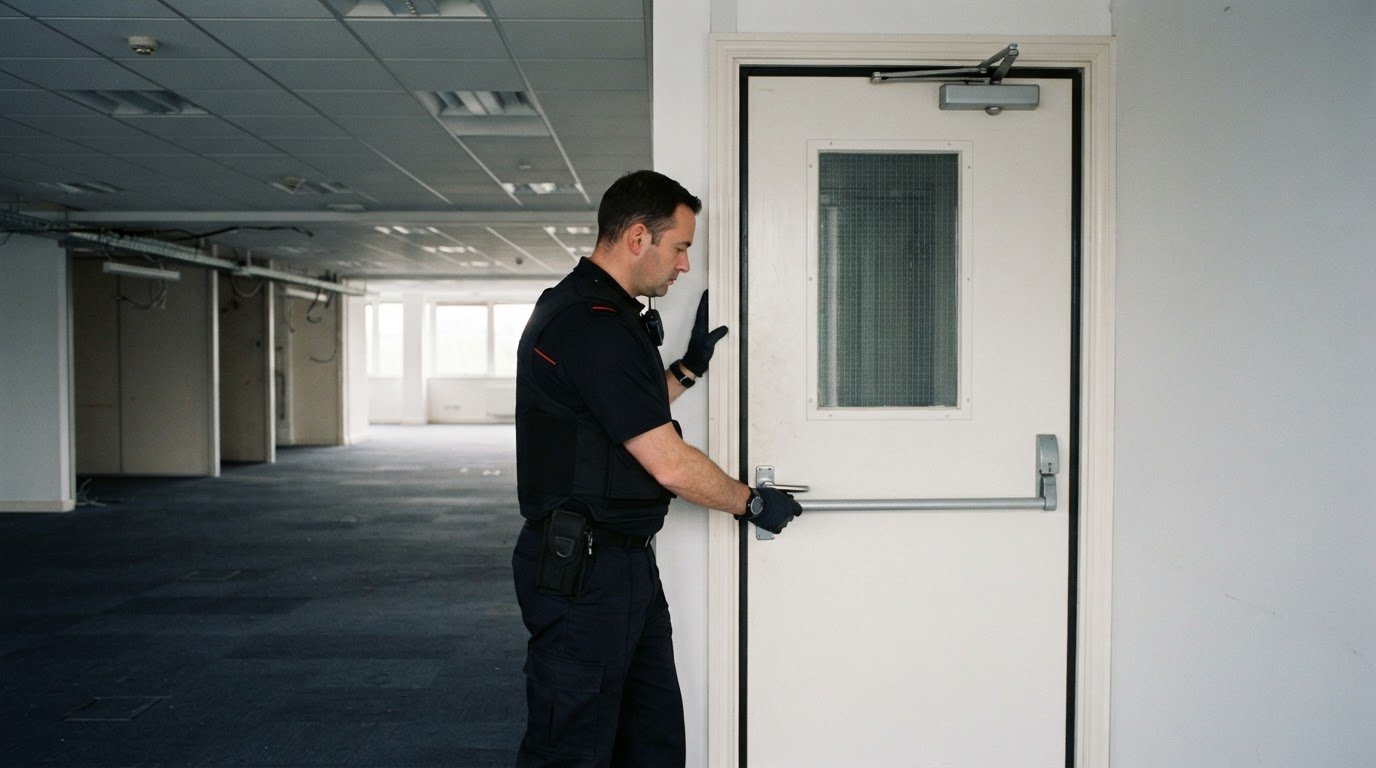
An empty building is not an inactive asset. Without day-to-day use, it may be more exposed to unauthorised access, damage and safety hazards. Void property security begins with recognising that a property is void when it stands empty, with no tenant or owner using it day to day.
The level of exposure varies with the building, its location and how long it will remain vacant. Owners and managers need safeguards that address specific risks while supporting practical oversight of the site.
This article explains what makes a property void, the threats empty buildings may face and how tailored security can help manage them. It also covers how professional guarding and patrols can protect vacant commercial premises.
Key Takeaways
- Distinguish an empty building from an active construction site so its security arrangements reflect how the property is used.
- Assess exposure to unauthorised access, arson, vandalism, squatting and fly-tipping when planning protective measures.
- Identify vulnerable metal, cabling, boilers and fixtures as part of a property’s security risk assessment.
- Match guarding, inspections and other safeguards to the site’s risks, access requirements and insurance conditions.
What is vacant or ‘void’ property?
A vacant or void property is a residential or commercial building standing empty, with no tenant or owner using it day to day. Its exposure depends on access, condition and whether work continues on site.
Defining a vacant or void property
A building may be between tenants, awaiting sale or temporarily closed. The defining feature is the absence of routine occupation. Vacant property security should assess the building, boundaries and remaining contents rather than assume that an empty site is risk-free. Before protection begins, record accessible doors, damaged glazing, utility status and rooms requiring controlled access.
Vacant property and construction site security
Construction-site security supports active work, with contractors, changing access points, materials and plant. An empty property may have no workforce or functioning infrastructure, so protection focuses on preventing entry, securing fixtures and identifying deterioration. Professionals assess temporary alarms, CCTV and patrols against power availability, coverage, access routes and response arrangements. Patrols may suit a site where fixed systems cannot operate.
Insurance, inspections and security responsibilities
Insurance terms vary. Commercial policies provide basic cover for up to 30 unoccupied days on average; standard UK property policies may change or restrict cover after 30 to 60 days. Insurers may require documented inspections or sealed access points. Inspection frequency depends on policy terms, with no single UK interval. The Occupier’s Liability Act 1984 places a duty of care on occupiers. Owners usually manage security, though an insolvency practitioner may assume responsibility overnight following insolvency or court-ordered repossession. Councils can charge a council tax premium on homes left empty for extended periods.
Physical measures should suit the site. British Standard-compliant steel screens and secure doors protect openings, while concrete barriers can restrict vehicle access to larger compounds; these blocks can weigh 4-6 tonnes. A clearance and cleaning visit can remove waste, expose access points and record damage, giving later inspections a clear baseline.
Preventing theft, arson, vandalism, squatting and fly-tipping
In the UK, vacant-property security covers measures against unauthorised entry, damage, theft and environmental hazards. The right approach depends on the property’s perimeter, access points and exposure.
Deterring trespass and vandalism
Visible monitoring and regular patrols can make an empty property a less attractive target. A security assessment should identify boundary weaknesses, concealed entrances and signs of attempted access, then tailor coverage to those risks. A damaged fence, for example, may need attention alongside checks of doors and windows. Recorded observations help owners track changes and arrange remedial work.
Squatting and unauthorised occupation
Unauthorised occupation can create a prolonged interruption for commercial owners. Removing squatters from a commercial property generally requires a civil eviction process, which may leave a site occupied for weeks or months. In England and Wales, squatting in a residential building has been a criminal offence since 2012 under section 144 of the Legal Aid, Sentencing and Punishment of Offenders Act. Urban exploration also involves unauthorised entry and can expose entrants to hazards inside neglected buildings.
Preventing theft, arson and fly-tipping
Home Office estimates suggest up to 60 fires occur in or next to an empty UK property each day. Across England and Wales, police recorded over ½ million arson or criminal-damage offences in 2022/23. These risks make visible presence, controlled access and monitoring relevant safeguards. Fly-tipping can also obstruct entrances and conceal further damage, so perimeter checks should record dumped waste and changes to access points.
Tailored security combines deterrence with timely identification of incidents. Owners can consider professional security support where a vacant site needs consistent monitoring and a documented response to emerging risks.
Solar CCTV towers can provide visible monitoring across a site. Manned guarding, property inspections and scheduled or random mobile patrols can deter intruders and help identify damp, break-ins, damage and hazards.

Theft of metal, cabling, boilers and fixtures
Empty buildings may still contain valuable assets. Copper pipework, electrical cabling, boilers, radiators and fitted equipment can attract criminal attention. Removing them can damage the building, delay future use and create safety concerns. An asset assessment should record what remains, where it is located and which access routes expose it.
Copper theft decreased by 4.8 per cent year on year, according to BauWatch’s 2026 construction crime report. That change does not remove the need to protect cabling and metalwork at a vacant site. A professional assessment can distinguish exposed external pipework from equipment inside secured plant rooms, then prioritise checks around those areas.
Protection is most effective when physical oversight and site monitoring address the same risks. Cameras can cover vulnerable entrances, while alarms can alert responders to unauthorised access. Manned guarding provides a visible presence and allows officers to observe activity directly. The right combination depends on the building layout, available infrastructure and assets left in place.
Regular inspections can help identify attempted removal before damage goes unnoticed. A guard or patrol can record disturbed doors, cut cabling, damaged service cupboards and missing fixtures, then report findings through an agreed procedure. The record also helps distinguish new damage from existing defects. For example, an inspection of the boiler room can note whether the door is secure and its contents have changed.
Vandalism and arson can accompany theft, particularly when intruders reach isolated rooms or service areas. Security planning should address both asset protection and the wider condition of the property. Clear access controls, observed entry points and timely reporting help owners respond to signs of attempted theft, damage or fire-setting. The aim is to protect remaining assets without obstructing authorised maintenance or future building work.
Tailored void property security
Effective void property security matches safeguards to the building’s condition, contents and likely threats. A risk assessment should map entrances, boundary weaknesses, isolated rooms and available infrastructure. It should also establish whether utilities remain connected and whether contractors need controlled access. These details help determine whether on-site guarding, mobile patrols or remote detection is suitable.
Where mains power is disconnected, solar-powered CCTV can provide coverage without relying on the building’s utilities. Rapid-deploy POD alarms can offer wireless intruder detection without fixed infrastructure. Cameras support visible monitoring, while alarms can alert responders when activated. Choose an approach according to the site layout, camera coverage, alarm response arrangements and practical needs of authorised visitors.
Monitoring can also address environmental threats. Vacant-property alarm monitoring may warn of fire, heat or excess water, allowing action to be taken. This matters where a leak could damage internal areas or a fire could threaten neighbouring premises. A tailored plan sets out who receives alerts, how incidents are escalated and how access is managed during an investigation.
Insurance conditions form another part of the assessment. Insurers may require evidence of monitored security, regular inspections or sealed access points before paying a claim. The security plan should therefore record the measures in place and inspections completed. Owners can use policy requirements to guide decisions, then adjust arrangements when building work, access needs or identified threats change.
A clear specification connects detection to a practical response. For example, mobile patrols can check vulnerable boundaries, while a guard can oversee a site requiring continuous presence. The appropriate balance depends on exposure, access and the consequences of delayed detection. Arrange tailored security for a vacant property to align safeguards with its risks and operational requirements.
FMT Security
FMT Security helps commercial property owners plan security around a vacant building’s access, condition and operational risks. Its security officers can provide a visible, accountable presence, with arrangements shaped around the site and its requirements. This can be relevant when a commercial premises is unoccupied, when access needs oversight, or when changing site conditions require a reassessment.
For a property connected with building work, Construction Security may be appropriate; Corporate Security or Industrial Security may suit other commercial settings. To plan suitable cover, outline the premises, current access arrangements and known risks, including any insurer requirements. These details provide a clear operational basis for the security plan.
To discuss security for a vacant commercial property, contact FMT Security.
Plan for the property’s next stage
A vacant building’s security needs can change as ownership, access arrangements or plans for reuse develop. Treat the security plan as part of that transition: align arrangements with the property’s current use and review them when circumstances change. This keeps void property security connected to practical operational decisions rather than treating it as a fixed measure throughout an uncertain period.
FMT Security provides Construction Security, Corporate Security and Industrial Security for commercial environments. These services are a practical next step when an empty premises needs professional oversight suited to its setting. Discuss the site, access requirements and operational concerns to establish a clear basis for appropriate support.
Take the next step at a pace that suits your planning. Discuss your property with FMT Security and consider how professional security can support its next stage.
Frequently Asked Questions
What should the security approach be?
Use a risk-led plan that ranks access exposure, property contents and operational priorities. The provider should establish which entrances authorised visitors may use, who approves entry and how exceptions are reported. For example, a planned contractor visit needs a named access process and a record of arrival and departure. Review the arrangements whenever occupancy, building work or access requirements change.
What’s the risk?
Risk depends on the building’s condition, location and remaining contents. Consider not only what could be taken, but also how unauthorised access might interrupt future use or affect neighbouring premises. A neglected entrance, for example, may allow access to continue after an initial breach. A professional assessment identifies the most consequential vulnerabilities and focuses oversight on them.
What security measures can a professional provider recommend for an empty property?
A tailored plan can combine on-site guarding, mobile patrols, access records and an agreed incident-escalation process. The right arrangement depends on the site layout, known vulnerabilities and whether visitors need access during the vacancy. For example, an officer can oversee an authorised contractor’s arrival, while a patrol can check a property that does not need a continuous on-site presence.
What are the risks of leaving a property vacant and unsecured?
An unsecured building may be harder to return to productive use if damage, contamination or missing fixtures require remedial work. Uncontrolled access can also make it difficult to establish when a problem began or who entered the premises. A clear record of the site’s condition and authorised visits supports investigation and helps property managers organise follow-up work based on evidence.
How can a professional secure doors, windows and access points in an empty property?
Security officers can include doors, windows and entrances in patrol or guarding checks, record visible defects and report access points that cannot be secured. They can also monitor authorised entry, such as a contractor using a designated door. Physical repairs or fitting screens require property-maintenance work; security personnel can document the issue and notify the responsible contact.