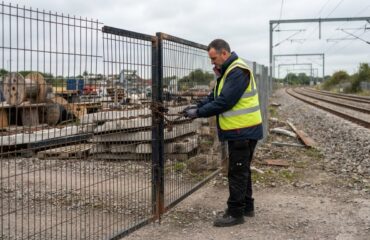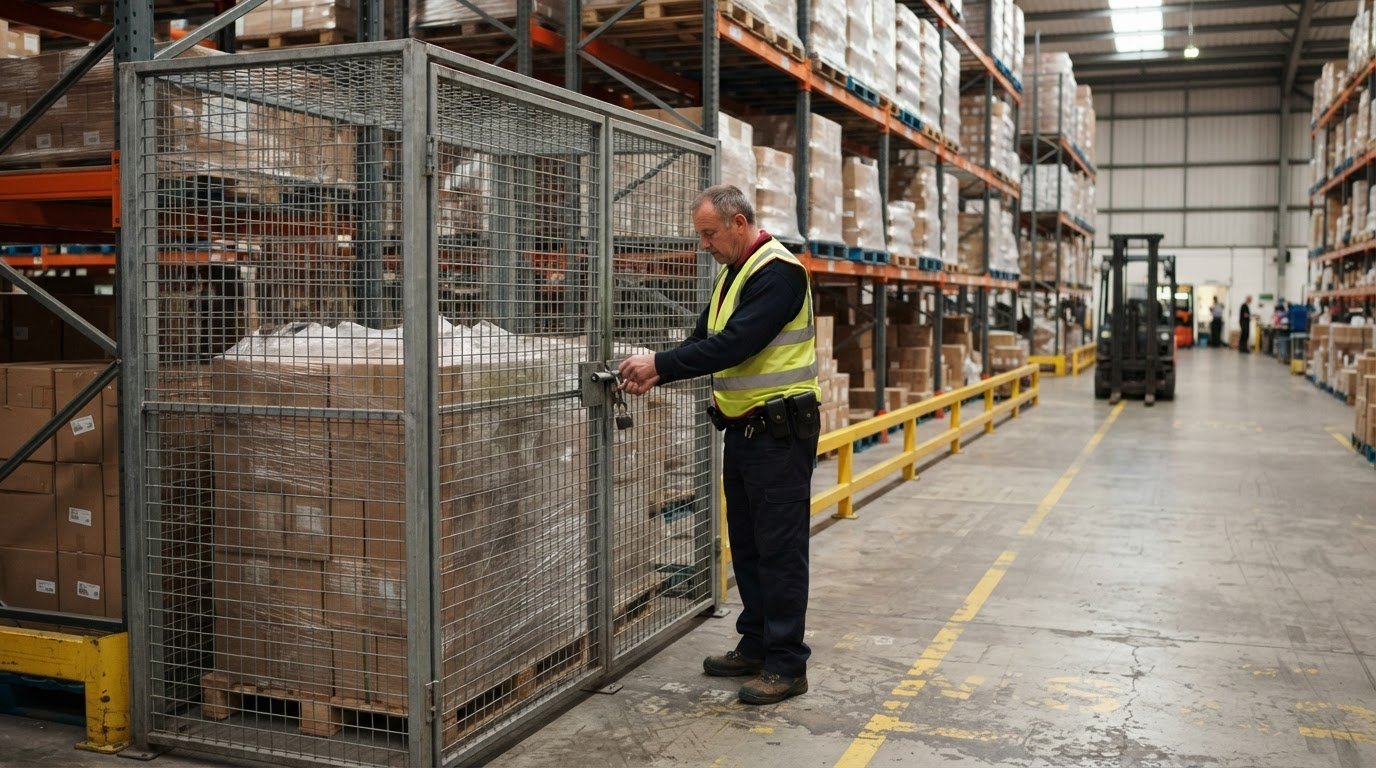
Warehouse security demand is driven by exposure to theft, criminal damage and arson, alongside the need to protect busy logistics operations. Warehouse security guards in the UK can deter unauthorised access, monitor site activity and respond to incidents. Not every warehouse needs 24/7 guarding: suitable cover depends on the site’s risks and existing security arrangements.
For distribution centres, a security incident can mean lost stock or property damage, as well as downtime, delayed deliveries and customer disruption. Exposure varies with shift patterns, vehicle movements, access points and periods when fewer staff are on site.
This article explains what drives demand for warehouse guards and how professional guarding can help address site risks. It covers officers’ duties, the factors behind an effective security plan, and how FMT Security’s industrial and static guarding services can support warehouse protection.
Key Takeaways
- Understand how site layout, shift patterns and existing arrangements shape the level of guarding a warehouse needs.
- See how visible presence and controlled access can help deter theft, criminal damage and arson alongside consistent site procedures.
- Learn how gatehouse duties, patrols and incident reporting can support the movement of drivers, visitors and vehicles through a distribution centre.
- Find out how BS 7499 relates to static-site guarding practice and where professional static guards can fit into a warehouse security plan.
What Is Driving Demand for Warehouse Security Guards in the UK?
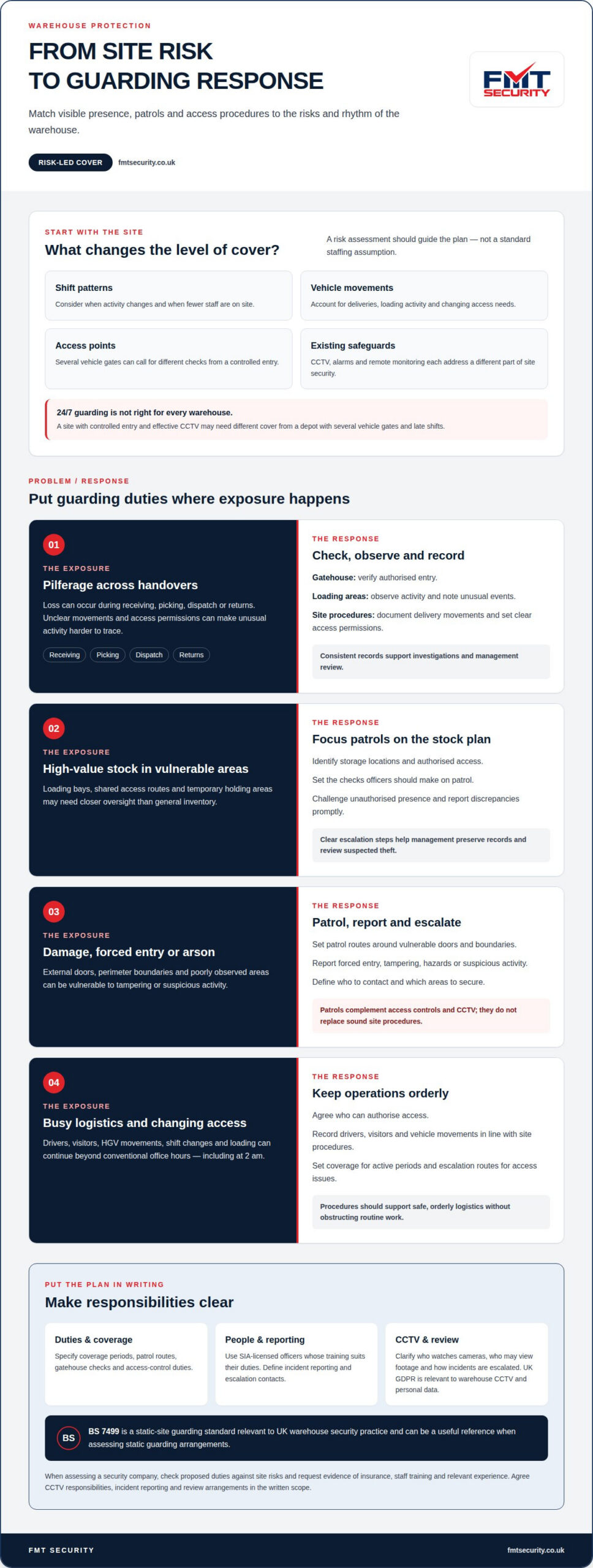
Warehouse security needs reflect site risks, operating patterns and existing safeguards. Not every warehouse requires 24/7 guarding. A site with controlled entry and effective CCTV may need different cover from a depot with several vehicle gates and late shifts. The choice should follow a risk assessment, not a standard staffing assumption.
BS 7499 is a static-site guarding standard relevant to UK warehouse security practice, according to the British Standards Institution. It provides a useful reference when assessing static guarding arrangements. Site procedures should also define patrols, access control and how staff record an incident, such as an attempted entry through a delivery gate.
Guards, CCTV, alarms and remote monitoring each address a different part of site security. CCTV can record activity and support monitoring, while an alarm can alert a response team to a trigger event. Manned guarding adds a physical presence to challenge unauthorised access and check the site. A warehouse can combine these measures to suit its layout and risk profile.
For example, cameras may cover a loading bay, while patrols check perimeter doors. CCTV review can help establish what happened after an incident, and recorded findings can inform revised procedures. Specialist security services can also support monitoring arrangements, but responsibilities for watching cameras and responding to alerts should be clear.
For manned guarding, specify SIA-licensed officers whose training suits their duties. Set out the required licence and role competencies in the service specification rather than assuming every security role has the same requirements.
UK GDPR is relevant to warehouse CCTV and personal data, according to the Information Commissioner’s Office. Define who may view footage, how monitoring is used and how incidents are escalated. These controls help staff understand surveillance arrangements and keep access to recorded information managed.
When selecting a security company, assess its proposed duties against the site’s risks and request evidence of insurance, staff training and relevant experience. The contract should set out coverage periods, patrol and access-control duties, CCTV responsibilities, incident reporting, escalation contacts and review arrangements. Check that the written scope meets operational requirements before agreeing to the service.
Deterring theft, criminal damage and arson
Theft prevention is most effective when officers combine a visible presence with consistent stock and access procedures. A gatehouse, perimeter patrols and clear incident records address different areas of risk.
Theft and pilferage prevention
Pilferage can happen during receiving, picking, dispatch or returns, so controls should cover every handover. Officers can verify authorised entry at the gatehouse, observe loading areas and record unusual activity for management review. Pair these checks with stock controls and site procedures, such as documented delivery movements and clear access permissions. Consistent records support investigations and help identify where losses may occur.
Protecting high-value stock
High-value stock may need closer oversight than general inventory, especially near loading bays, shared access routes or temporary holding areas. A site plan can identify storage locations, authorised access and the checks officers should make on patrol. Trained officers can challenge unauthorised presence and report discrepancies promptly. Clear escalation steps help management preserve records and review suspected theft without disrupting other operations.
Preventing criminal damage and arson
Deterring criminal damage and arson means paying attention to vulnerable external doors, perimeter boundaries and poorly observed areas. Regular patrols can help identify forced entry, tampering or suspicious activity early. Officers should know how to report hazards and follow site escalation procedures, including whom to contact and which areas to secure. These measures complement access controls and CCTV, but do not replace sound site procedures.
Effective loss prevention also depends on matching duties to the warehouse layout, stock profile and operating procedures. A written brief can define gatehouse checks, patrol routes, reporting lines and how officers coordinate with warehouse staff. For support aligning duties with site risks, review warehouse security arrangements.
Distribution centre and logistics security
Distribution centres and factories need procedures that reflect active operations, vehicle movements and changing site access. A guard’s presence should support safe, orderly logistics without obstructing routine work.
Distribution centre security procedures designed by professional security providers
Security procedures should account for entrances, shift changes, loading areas and site-specific risks. Agree who can authorise access, how drivers and visitors are recorded, and which incidents need escalation. At a distribution centre, procedures may cover vehicle movements, gatehouse records and patrol reporting. Duties should fit the site’s operating schedule and existing arrangements.
Some logistics sites remain active beyond conventional office hours. A distribution centre may have HGV movements, shift changes and loading at 2 am, so procedures need to define coverage during those periods. Clear reporting lines help operations managers respond to access issues without delaying legitimate deliveries.
Factory and logistics security
Factory security must account for staff, contractors, deliveries and goods moving between operational areas. Agreed access permissions and incident reporting help maintain oversight while production continues. At a logistics site, guards may record vehicle movements and check paperwork against site procedures. At a factory, patrols can focus on access points and areas identified in the site plan.
Company-size figures describe the security-service market, not warehouse staffing. The UK service-company list has a median employee-size band of 11-50 employees. It also records 75 companies with 201-500 employees, 14 with 501-1,000, and one with 5,001-10,000 employees, as of 5 November 2026.
Responding to a break-in or incident
If a guard discovers a break-in, they should follow the agreed incident procedure, control access to the affected area and notify management. They may contact emergency services when the situation and site protocol require it. The incident record should capture the time, location, findings, actions taken and relevant notifications.
Prompt reporting gives managers a clear basis for coordinating operational decisions, reviewing disruption and arranging follow-up. Procedures should specify who receives the report and how updates reach relevant teams.
Drivers of demand for warehouse security guards
Demand depends on warehouse asset value, site exposure and the pace of logistics operations. No single guarding arrangement suits every facility. Risk varies with site layout, access points, operating hours, stock profile and existing security measures. These factors help determine whether a site needs a visible manned presence, mobile patrols or a combination.
Distribution networks rely on warehouses to keep goods moving between suppliers and customers. Theft, criminal damage or arson can therefore affect more than stock: disruption may delay deliveries, interrupt operations and inconvenience customers. The practical priority is continuity. Security arrangements should address vulnerable areas and define how to respond when an incident occurs.
Exposure varies across a facility. Multiple entrances, vehicle gates and external storage areas can pose different access risks from a compact, single-entry site. A risk review should map valuable assets, identify periods with fewer staff on site and clarify who acts on alarms or reports. These findings help determine where licensed officers, CCTV monitoring or mobile checks can contribute most.
Demand does not mean every warehouse needs 24/7 guarding. Coverage should match site-specific risks and current arrangements. A staffed gatehouse may be important during busy delivery periods, while perimeter checks may address a different exposure outside those periods. The number of guards required depends on site characteristics, operations, risks and existing security systems.
The clearest takeaway is to treat guarding as part of a coordinated site plan, rather than an isolated response to theft. Set priorities around assets, access and business continuity, then assign duties and reporting routes accordingly. This creates a practical basis for deciding where physical presence adds value and where other measures support it. Discuss warehouse security requirements to relate guarding needs to your facility’s risks.
FMT Security: Static Guards
FMT Security provides static guards and security guard services for commercial sites that need an on-site presence. For a warehouse, duties can be organised around agreed access procedures, patrol requirements and incident reporting, giving site managers clear operational oversight. The right arrangement depends on the facility’s layout, activity and identified risks.
Where a warehouse is part of a wider industrial or corporate estate, FMT Security also provides Industrial Security and Corporate Security. These services can align warehouse protection with security procedures across connected premises. Discuss the site’s operations, vulnerable areas and required guard duties to define a suitable scope.
For a practical discussion about static guarding for your facility, contact FMT Security.
Set a clear direction for site protection
The next step is to turn warehouse security priorities into a practical service brief. Define the areas requiring attention, the expected duties and how site management should receive operational updates. This gives discussions about warehouse security guards in the UK a clear focus on your facility, rather than a standard arrangement.
FMT Security provides Construction Security, Corporate Security and Industrial Security. These services support organisations managing warehouses alongside other commercial or industrial premises, where consistent procedures matter across the wider estate. The scope should reflect the site’s operations and security requirements.
A considered brief helps establish what professional guarding should address and how it fits existing site arrangements. Contact FMT Security to discuss a suitable approach for your facility and take the next step towards more structured protection.
Frequently Asked Questions
Why do warehouses need on-site security personnel?
On-site personnel provide a visible point of oversight within the warehouse. They can observe activity as it happens, follow agreed entry procedures and report unusual behaviour to management. This is especially useful where deliveries, staff movements and contractors overlap. A guard’s duties should suit the facility’s operating pattern, supporting daily work without unnecessary delays.
How can a professional security provider help reduce theft in a UK warehouse?
Guarding duties can be shaped around the warehouse’s stock-handling process. For example, officers can focus on transfer points where goods move between receiving, storage and dispatch. Agreed procedures can also support staff access permissions and consistent incident records. These measures complement inventory controls, helping management spot irregularities and identify where procedures may need adjustment.
How can a professional security provider improve warehouse guard scheduling?
Guard coverage can be aligned with site activity, including delivery windows, shift changes and quieter periods. This places officers where oversight is most useful instead of applying the same pattern throughout the day. Scheduling can also account for required duties and site layout. As operations change, review coverage against updated risks and responsibilities.
What Does Effective Warehouse Security Look Like?
Effective warehouse security is a coordinated plan with clear responsibilities, not a single measure working in isolation. It identifies assets and areas needing protection, sets access permissions, and defines how incidents are reported and reviewed. For example, management should know who receives an alert and who authorises action. Regular reviews help keep procedures relevant as stock, staffing and operations change.
What affects the cost of warehouse security?
Warehouse security pricing depends on factors such as staffing, coverage hours, site size, entrances, required duties and contract length. A small facility with straightforward access needs differs from a large distribution site with several gates and varied operating periods. FMT Security provides pricing after a free quote is requested. A clear outline of the premises and required cover helps establish the right scope.
What do warehouse security guards in the UK do?
Warehouse security guards in the UK carry out duties agreed for the site, which may include access control, patrols, CCTV monitoring and incident reporting. They can also record vehicle movements, support gatehouse procedures and respond to alarm activations under agreed instructions. Responsibilities depend on the site’s operational requirements, so define duties and escalation routes before deployment.