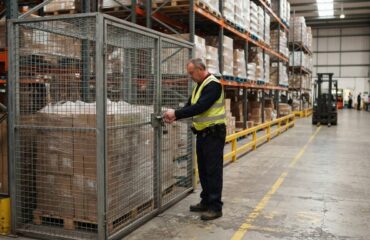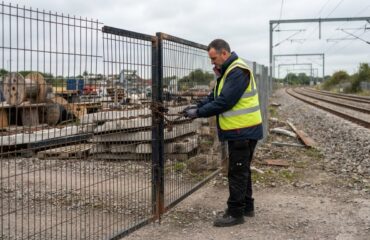
A locked gate alone cannot secure an active roadworks compound. Effective highway roadworks compound security combines controlled vehicle and pedestrian access, suitable boundary measures, surveillance and a visible security presence to help deter theft, fly-tipping, vandalism and unauthorised entry. It can also support safer movement at access points where construction traffic and pedestrians may cross paths.
Protecting equipment and materials is essential, but a security plan must also address risks beyond the perimeter and activity when work stops. This article explains how access gates, surveillance and manned guarding can address common roadworks site vulnerabilities, what UK requirements shape site boundaries and which operational factors influence the level of protection needed. It also explains how professional construction security can support a more controlled, accountable compound.
Key Takeaways
- Plan separate, controlled routes for vehicles and pedestrians, and make site entry arrangements part of the compound’s wider access-control approach.
- Reduce opportunities for fly-tipping, theft and vandalism by securing materials, plant and equipment within the site perimeter, particularly when work stops.
- Assess security alongside public safety: suitable boundaries and controls help manage unauthorised access and risks around moving vehicles, falling objects and excavations.
- Match surveillance and manned guarding to the compound’s layout, activity and exposure so that security measures support consistent site oversight.
Vehicle and pedestrian access-control gates
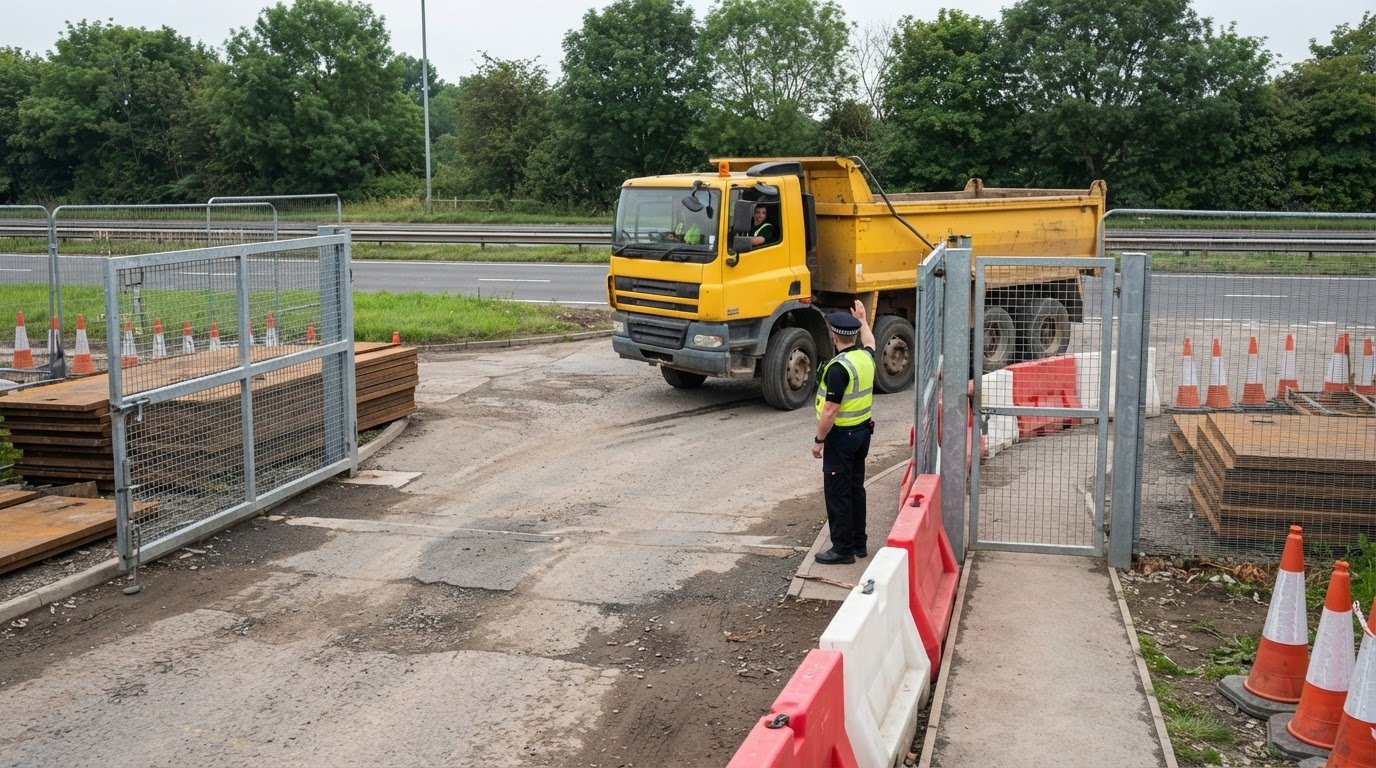
At a construction site, gates define where contractors, delivery drivers and pedestrians can cross the boundary. Separate, controlled entry points help manage vehicle movements and reduce opportunities for unauthorised access.
Access for larger site vehicles
Large delivery vehicles need an entry route that suits the compound layout and the work programme. A designated gate, a controlled approach and clear coordination with site personnel help prevent vehicles entering through pedestrian access or obstructing other traffic. The A57 Link Roads project in Hyde provides a practical example: access to the Hyde Road compound was scheduled for widening from 5 January 2026, with work expected to last around three weeks. Such changes make it important to keep gate arrangements aligned with the current site layout.
Preventing unauthorised compound entry
Gate control works best with a clearly defined boundary and a consistent process for admitting authorised people. A guard can oversee the entrance, establish the reason for a visit and direct contractors or deliveries to the appropriate site contact. Keeping gates closed and secured when access is not needed helps restrict entry and deter theft and vandalism. A separate pedestrian route also reduces the risk of people walking through a vehicle entrance.
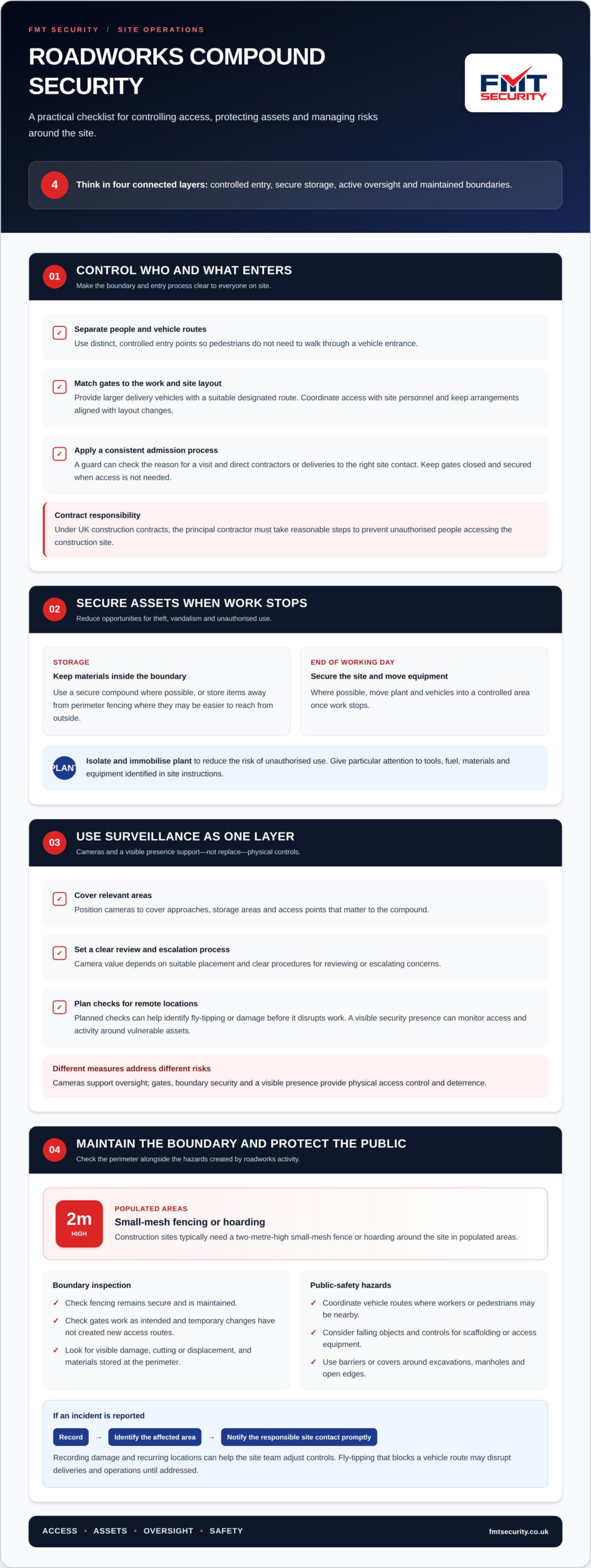
Under UK construction contracts, the principal contractor must take reasonable steps to prevent unauthorised people accessing the construction site. The project team should therefore define access arrangements, site boundaries and the responsibilities of contractors before work begins.
A professional security provider can help protect plant, tools, materials and fuel overnight by controlling compound entry and maintaining a visible guarding presence. Site instructions can identify which assets need particular attention and how access should be handled when deliveries or contractors arrive. This gives the gate function a clear operational purpose beyond simply restricting entry.
Fly-tipping, theft and vandalism
Roadworks compounds can attract unauthorised dumping and opportunistic interference, particularly when stored equipment is visible from public areas. Fly-tipping can obstruct working space and create extra demands for handling, removal and access control. Theft of tools, fuel or materials can interrupt infrastructure projects, while vandalism may damage barriers, signs or equipment needed for safe operations.
Start with the site layout. Keep materials within the boundary, preferably in a secure compound or away from perimeter fencing. Items stored beside a fence may be easier to reach from outside. At the end of each working day, secure the site and move plant and vehicles into a controlled area where possible. Isolate and immobilise plant to reduce the risk of unauthorised use.
Cameras can support site oversight when positioned to cover relevant approaches, storage areas and access points. Their value depends on suitable placement and clear procedures for reviewing or escalating concerns. Cameras do not replace physical access control: gates, boundary security and a visible presence address different risks. At remote locations, planned checks can help identify dumping or damage before it disrupts work.
For contractors, a practical response process matters as much as deterrence. Record reported incidents, identify the affected area and notify the responsible site contact promptly. If fly-tipping blocks a vehicle route, for example, the obstruction may disrupt deliveries and operations until it is addressed. Records of damage can also help site teams identify recurring locations and adjust their controls.
Effective highway roadworks compound security therefore connects asset protection with continuity of work. A site-specific security presence for roadworks can help monitor access and respond to activity around vulnerable materials, plant and infrastructure. The control plan should reflect what is stored, where it sits and how the compound is used after work stops.
Security risks at highway and roadworks sites
Roadworks compounds face risks beyond theft, including vehicle movements, temporary works and hazards near the public boundary. A security plan should address both unauthorised access and conditions that could harm workers or passers-by.
Regulations governing compound security
In populated areas, construction sites typically need a two-metre-high small-mesh fence or hoarding around the site. Boundaries should be physically defined with suitable fencing where necessary, and the fencing should be planned, provided and maintained. Construction businesses must carry out work without putting the public at risk. The principal contractor’s access controls should therefore be considered alongside safe transport routes, temporary work areas and perimeter inspections.
Other risks also need attention. Moving vehicles can strike pedestrians entering or leaving a site, while falling objects may reach beyond the boundary. Scaffolding and access equipment require controls that protect people outside the site during erection, dismantling and use. Barriers or covers around excavations, manholes and open edges address separate fall hazards.
Security plans and inspection checklists
A professional roadworks compound security plan and inspection service should document the boundary, access points, adjacent land use, work areas and measures to exclude unauthorised people. Inspections should assess whether fencing remains secure, gates work as intended and temporary changes have created new access routes. The checklist should also cover perimeter storage and visible damage, including signs of cutting or displacement.
Site checks should consider how security interacts with daily operations. For example, a delivery route may bring a vehicle close to workers or pedestrians, requiring coordinated access and clear separation. Inspectors should also note uncovered pits, unsecured access ladders and materials that could topple or roll. These observations help the workforce address changing hazards as projects progress.
Security supports safety, but it does not replace traffic management or physical safeguards. A useful inspection records specific defects, their location and the action required, helping site teams prioritise repairs and maintain a controlled compound.
What UK regulations govern security at roadworks compounds?
UK requirements link compound security with site boundaries and public protection. The principal contractor must take reasonable steps to prevent unauthorised people from accessing the construction site. Measures should reflect the site’s layout, nearby land use and access arrangements, rather than relying on a gate as the only control.
In populated areas, construction sites typically need a two-metre-high small-mesh fence or hoarding around the site. Where suitable fencing is necessary, the boundary should be physically defined, planned, provided and maintained. For a roadworks compound beside a footway, this means considering how the barrier separates the public from active work and vehicle access.
Project preparation matters too. The project client should include boundaries, adjacent land use, access and measures to exclude unauthorised people in the pre-construction information. This gives the principal contractor a basis for planning compound controls before work starts. Changes to an entrance or boundary during the programme should be reflected in the arrangements.
Public protection means more than preventing entry. Construction work must be carried out without putting members of the public at risk. Sites should prevent objects from falling beyond the boundary and protect people outside from scaffolding or access equipment during erection, dismantling or use. Barriers or covers are appropriate around excavations, manholes, stairwells and open edges. Scaffold toe-boards, brick guards and netting help contain materials.
These requirements work together, but address distinct risks. A fence can define a boundary, while covers protect people from falls and falling objects. The site team should consider children’s access to excavations, remove access ladders where appropriate, lock away hazardous substances and store materials so they cannot topple or roll. Each measure should suit the compound’s current activities.
For a structured approach to site controls, discuss roadworks compound security.
FMT Security
FMT Security provides Construction Security for roadworks compounds. This is a practical option when site teams need professional oversight alongside access arrangements, boundary controls and procedures for protecting equipment and materials.
Security requirements vary with the compound layout, work activity, access points and periods when the site is unattended. FMT Security tailors manned guarding to operational needs, helping manage entry and maintain a visible security presence. This is useful when a project requires oversight of contractors, deliveries or vulnerable assets.
Share the compound’s location, operating arrangements and main security concerns to discuss suitable support. Contact FMT Security to discuss roadworks compound security.
Put a proportionate security plan in place
Roadworks compounds change as projects progress, so security arrangements should keep pace with current access points, work areas and operational priorities. A planned review can identify when temporary changes create new exposure or when the level of oversight no longer fits the site. Treat security as part of project coordination, with responsibilities and escalation procedures understood by the relevant teams.
FMT Security offers Construction Security, Corporate Security and Industrial Security. These services support organisations in different operational environments, while a site-specific discussion can focus on a roadworks compound’s requirements. Effective highway roadworks compound security matches professional oversight to the project’s actual risks, rather than relying on a fixed approach as conditions change.
For a practical discussion about your site’s requirements, contact FMT Security about site security. A clear starting point can help establish the right next steps for a more controlled compound.
Frequently Asked Questions
What security measures are required for a UK highway roadworks compound?
The principal contractor must take reasonable steps to prevent unauthorised access and protect the public from construction risks. In practice, controls should reflect the compound’s current layout and work phase. For example, a relocated delivery entrance can create a new approach to monitor. Review access arrangements whenever the workfront, neighbouring land use or site traffic pattern changes.
How should a professional specify temporary fencing and gates for a roadworks compound?
Specify fencing and gates with the site boundary, ground conditions, vehicle routes and expected project changes in mind. The plan should show where pedestrian and vehicle access meet, how gates close securely and which sections may need to move as work progresses. For example, a delivery entrance near a public footway needs arrangements that control entry without directing pedestrians into vehicle movements.
What are the risks of theft, vandalism and unauthorised access at highway works compounds?
Risks include the loss of tools, fuel or plant, damage to site assets and disruption if equipment becomes unavailable. Unauthorised entry can also expose visitors or intruders to moving vehicles and active work areas. A damaged sign or displaced barrier may create an additional hazard for road users. The consequences depend on what is stored, where it is positioned and how quickly damage is identified.
What CCTV, alarms and lighting should a professional security provider recommend for a temporary roadworks compound?
Recommendations should follow a site assessment, not a standard equipment list. The review should identify vulnerable storage areas, access approaches, blind spots and expected changes as the compound moves. Lighting should support observation without creating glare or confusion for road users. Cameras and alarms need clear monitoring and escalation procedures so an observed concern reaches the appropriate site contact.
How should a professional security provider manage compound access control and visitor checks?
Access control should follow written site instructions that identify authorised contractors, delivery procedures and the person responsible for receiving visitors. At the entrance, a guard can establish each visitor’s purpose, record relevant details and contact the site representative before allowing entry. For deliveries, the process should direct the driver to the designated unloading area and avoid unnecessary movement around the compound.