A camera can record an incident, but a trained security officer can help deter it and manage the response. Effective wind farm construction site security in the UK combines visible guarding with controlled contractor access, site patrols and support for cameras and alarms. Officers can monitor entry, identify suspicious activity and help protect equipment, materials and temporary infrastructure.
Remote locations and changing construction activity make consistent oversight important. Access points, delivery schedules and work areas can change as a project progresses, so security arrangements should reflect the site’s current risks and routines.
This article explains what security guards do on wind farm construction sites, how patrols and access procedures can help deter theft, and how manned guarding can complement cameras and alarms. It also covers the practical factors behind a suitable security plan, so you can assess what professional cover should address before work begins.
Key Takeaways
- Prioritise plant, machinery, cable and temporary infrastructure in a site-specific theft prevention plan.
- Coordinate contractor and maintenance access with site activity so authorised visits are managed consistently.
- Use cameras and alarms as part of a wider security plan, with physical protection and clear response procedures.
- Consider FMT Security’s Construction Security when a project needs professional guarding tailored to its site risks and operating requirements.
Theft prevention for plant, machinery and cables
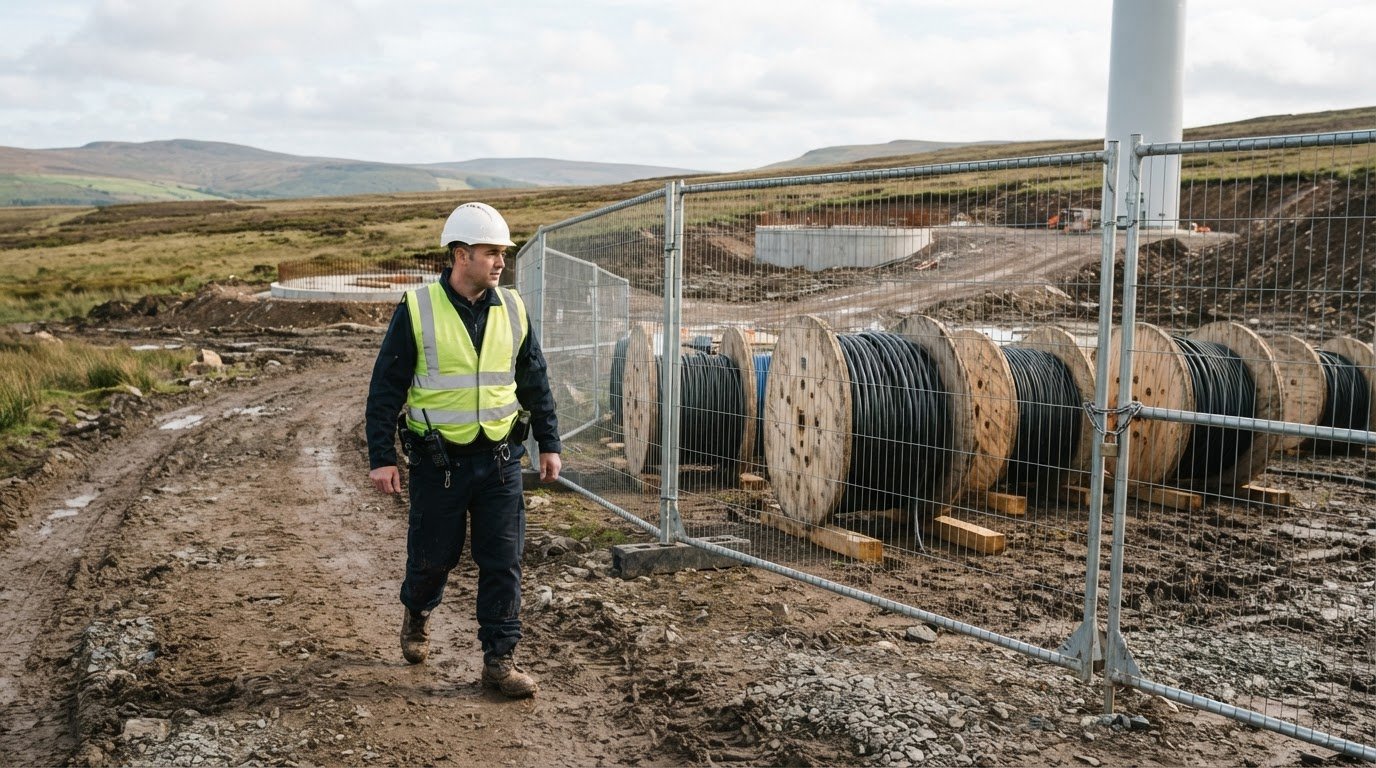
Wind farm construction sites can expose valuable plant, machinery and cabling to theft, trespass and vandalism. Effective prevention starts with identifying exposed assets, access points and the operational consequences of their loss.
Plant and machinery theft risks
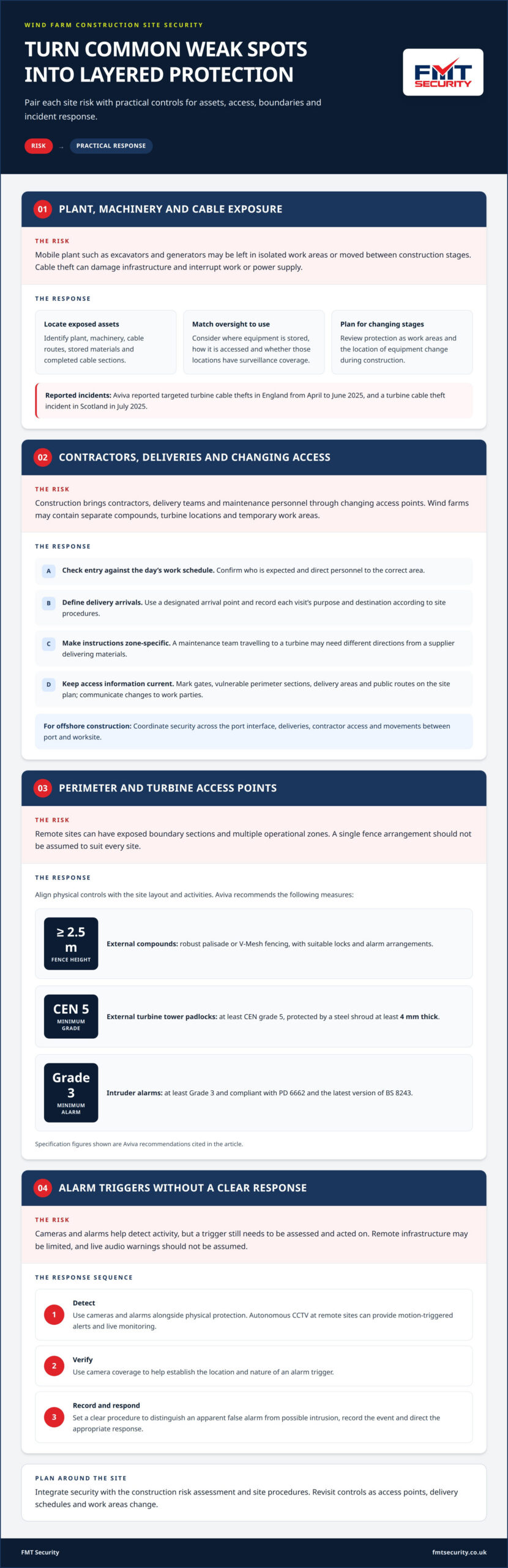
Excavators, generators and other mobile plant may be vulnerable when left in isolated work areas or moved between construction stages. Security planning should account for where equipment is stored, how it is accessed and whether those locations are covered by surveillance. Cameras can support oversight, while clear reporting procedures help ensure suspicious activity or damage is acted on.
Cable theft and power continuity
Copper used for power transmission and connections between turbines can attract thieves. Cable theft can damage infrastructure and interrupt work or power supply, so cable routes, stored materials and completed sections warrant attention as the project develops. Aviva reported targeted turbine cable thefts in England from April to June 2025 and a turbine cable theft incident in Scotland in July 2025. These incidents underline the importance of treating cable protection as an operational priority.
Trespass, vandalism and sabotage
Remote wind farms may have limited day-to-day activity, making unauthorised access, vandalism and deliberate damage practical concerns. Security arrangements should reflect changing site activity and the potential for equipment damage to affect project progress or power continuity.
Site security requirements
For HSE-related planning, integrate security controls with the construction risk assessment and site procedures. Set out how access, plant exposure, public interface and incident escalation will be managed, according to the project’s layout and activities. For offshore construction, coordinate security across the port interface, deliveries, contractor access and movements between port and worksite. According to the UK legislation register, the Guard Dogs Act 1975 prohibits leaving dogs alone to protect a property, subject to minor exceptions. An addition such as guard dogs therefore cannot replace supervised security arrangements.
Access management for contractors and maintenance teams
Construction schedules bring contractors, delivery teams and maintenance personnel through changing access points. A controlled process helps distinguish authorised visits from unexpected entry and keeps site movements aligned with current work.
Contractor and delivery team access
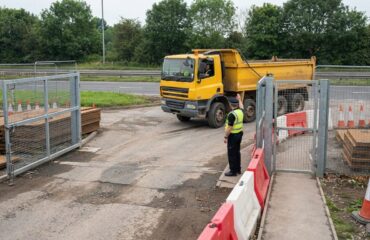
At the entrance, personnel can be checked against the day’s work schedule and directed to the correct area. Delivery teams should use a defined arrival point, with the purpose and destination of each visit recorded according to site procedures. This helps prevent vehicles or visitors from entering operational zones without a clear reason. Communicate appointment or work-party changes to those managing access.
Windfarm and energy park access controls
Wind farms and energy parks can include separate compounds, turbine locations and temporary work areas. Access control should account for these distinct zones, rather than treating the entire development as a single entry point. A maintenance team travelling to a turbine, for example, may need different instructions from a supplier delivering materials. Security personnel can monitor movements and help keep operational routes clear as project activity changes.
Physical boundary controls
Boundary controls should guide authorised traffic to designated entrances and make unauthorised routes easier to identify. A site plan can mark gates, vulnerable perimeter sections, delivery areas and routes used by the public. These details help align fencing, signs, access procedures and surveillance with actual site conditions.
For UK projects, the practical security requirement is to include access and boundary risks in site planning, then match controls to the hazards, layout and construction activity. A single fence arrangement should not be assumed to suit every site. Where contractor movements need staffed oversight, construction site security can support consistent access management.
Physical security alongside alarms and cameras
For UK wind farm construction sites, recommended measures combine physical protection, cameras, intruder alarms and a defined response process. Aviva recommends robust palisade or V-Mesh fencing at least 2.5 metres high around external compounds, alongside suitable locks and alarm arrangements.
HSE-related security planning should address site-specific risks, safe access and protection from unauthorised entry. The security measures should work alongside construction controls, rather than obstructing emergency access or planned operations.
Physical barriers make access more difficult, while cameras and alarms help detect activity around vulnerable infrastructure. Aviva recommends external turbine tower padlocks meeting at least CEN grade 5, protected by a steel shroud at least 4 mm thick. For intruder alarms, Aviva recommends at least Grade 3 and compliance with PD 6662 and the latest version of BS 8243. These specifications address different points of exposure, so gates, turbine access and compound perimeters need consistent protection.
Camera coverage can support alarm verification by showing the location and nature of a trigger. Autonomous CCTV systems at remote sites can provide motion-triggered alerts and live monitoring, helping support a response where infrastructure is limited. A clear procedure should distinguish an apparent false alarm from a possible intrusion, record the event and direct the appropriate response. Do not assume live audio warnings are available unless the system specifically supports them.
Key holding connects alarm activation with a physical investigation. An appointed key holder can attend after a trigger, assess the site and secure the facility where necessary. The response plan should define who receives alerts, how access is arranged and how findings are recorded. Insurers may require camera surveillance, on-site detection, connection to a Private Alarm Centre and security across the whole site. These controls work best when barriers, detection and response are coordinated.
Manned security officers and site patrols
At a remote wind farm, a visible officer can deter unauthorised entry and respond to activity that cameras only record. For wind farm construction site security in the UK, manned guarding, mobile patrols and CCTV each serve distinct purposes. Their effectiveness depends on the site layout, installation stages, valuable assets and response requirements. Combining them can provide broader coverage than relying on one measure alone.
A static guard can control a designated entrance, monitor contractor movements and report unusual activity near turbines or stores. Mobile patrols can check separated areas, gates and boundary points, while CCTV supports surveillance between visits. Aviva recommends static guarding at UK wind farms follows BS 7499, and mobile security providers follow BS 7984-3:2020. These standards provide benchmarks when planning each role.
Officers also provide a human response when a concern needs assessment. For example, a patrol can investigate a damaged boundary, identify the affected area and escalate the incident through agreed procedures. CCTV can help locate activity, but it cannot independently secure an entrance or assess changing site conditions. A tailored deployment should reflect access points, work schedules and identified risks.
A professional security provider can assess and update a plan by reviewing the site layout, current installation phase, access routes, valuable equipment and incident records. As the project changes, reassess wind farm construction site security in the UK against new work areas, deliveries and operating conditions. This keeps officer positions and patrol routes relevant to current risks.
For remote or dispersed sites, define how officers report incidents, whom they notify and what immediate actions they are authorised to take. Clear reporting connects patrol observations with camera footage and alarm events. It also gives project teams a documented basis for adjusting cover when turbines, compounds or access routes enter use.
Discuss wind farm site security to consider how professional guarding and patrols can support your project’s operational requirements.
FMT Security: Construction Security
FMT Security provides Construction Security for projects requiring professional oversight of site access, personnel and valuable assets. On a wind farm build, guarding arrangements can reflect the project’s layout and changing installation activity, helping distinguish authorised site movements from unauthorised access.
FMT Security’s building site security service suits sites where dispersed work areas, contractor visits or deliveries call for disciplined on-site management. Arrangements depend on operating requirements and the risks identified for the construction phase. Professional guarding is a practical next step when cameras, alarms and boundary controls need to work alongside a managed, visible presence.
Contact FMT Security to discuss Construction Security for your wind farm project.
Plan security around the project’s next phase
Security requirements can change as a wind farm moves from early works to installation and commissioning. Treat the plan as an operational document: align responsibilities with the current phase, record who makes decisions and ensure arrangements can adapt when work areas or access needs change. This planning keeps wind farm construction site security in the UK connected to project delivery, rather than treating it as a separate task.
FMT Security provides Construction Security for projects requiring professional site protection, alongside Corporate Security and Industrial Security. The appropriate service depends on the environment and the security responsibilities involved. Discuss the project’s operating requirements to identify the guarding support needed and request a free quote.
Contact FMT Security about site security to discuss your wind farm project and its requirements. A considered next step can help put clear security responsibilities in place as work progresses.
Frequently Asked Questions
What Will My Security Guard Do?
A security guard provides a visible, on-site presence and carries out duties agreed for the project. FMT Security’s SIA-licensed officers can monitor access points, conduct perimeter checks, safeguard machinery and materials, and maintain incident logs. If an unplanned vehicle arrives, for example, the officer can record the visit and follow the site’s agreed access procedure. Clear handovers help project personnel act on reported issues.
Why wind farms are the target?
Wind farms can face trespass and theft risks because remote locations may have limited day-to-day activity, while construction brings valuable materials and equipment onto site. Before a turbine is operational, work areas and temporary infrastructure may also change frequently, creating shifting access patterns and exposed assets. Copper cabling can be a particular concern because theft may disrupt installation work and power connections.
What security risks affect UK wind farm construction sites?
Risks include theft of plant, machinery, fuel and cable, as well as trespass, vandalism and deliberate damage. Construction may leave materials temporarily stored away from main work areas, while changing routes can create access gaps. Damage to cables or turbine components can delay work and affect power continuity. Site plans should account for these exposures at each project stage, including delivery areas and temporary compounds.
What security measures protect turbines, cables, fuel and plant from theft?
Use layered measures suited to each asset’s location and exposure. Keep an organised record of valuable plant and materials, define who can access storage areas, and include exposed cable routes and fuel stores in surveillance and patrol coverage. Physical barriers and suitable locks can restrict access, while cameras and alarms help detect activity. A reporting process supports prompt investigation of missing items or suspected tampering.
How should access control and visitor management work at a wind farm construction site?
Use a designated entrance and a consistent process for recording visitors, contractors and deliveries. Confirm each arrival’s purpose and destination against the project’s arrangements, then direct authorised personnel to the appropriate area. For example, distinguish a maintenance visit to a turbine from a delivery to a compound. Keeping visit records and communicating schedule changes helps maintain oversight as construction activity shifts.
What temporary fencing and perimeter security can a professional provider recommend for remote UK wind farm sites?
A professional provider can assess the perimeter, access points, terrain and construction activity before recommending suitable boundary controls. For external wind farm compounds, Aviva recommends robust palisade or V-Mesh fencing at least 2.5 metres high. Temporary arrangements should also account for gates, vehicle access and areas where work changes the boundary. Patrols and surveillance can complement fencing by identifying damage or unauthorised entry.